
بيت الحكمةBeit al-Hikmah · The House of Wisdom
Reviving the spirit of the Islamic Golden Age, with Islam, AGI, and the example of the Prophet Muhammad ﷺ at its center.
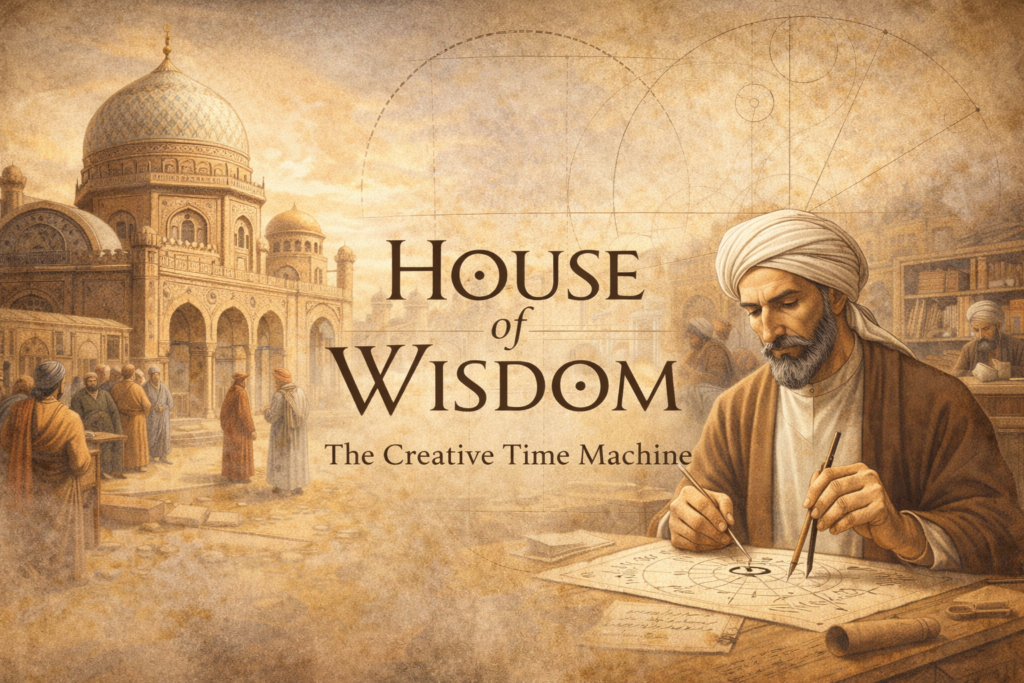
Welcome to the House of Wisdom
A Celebration of the Creative Mind, the Saints, the Scholars, and the People Who Changed Humanity
In the Name of Allah, the Most Gracious, the Most Merciful.
Welcome to the House of Wisdom.
Today, we begin a celebration. A celebration of the extraordinary minds, the saints, the scholars, the artists, the inventors, and the creative people who helped build civilization and whose contributions continue to benefit humanity.
We begin with gratitude. We begin with remembrance. And above all, we begin with Bismillah.
As Muslims, we are standing at a historic crossroads.
Artificial intelligence is advancing at an extraordinary pace. Artificial General Intelligence (AGI) may fundamentally change how humanity learns, communicates, governs, creates, and understands the world.
And with these developments come questions that we can no longer afford to ignore.
What will artificial intelligence mean for Islam? How will our religion, our history, our sacred traditions, and the teachings of Prophet Muhammad صلى الله عليه وآله وسلم be understood and represented by intelligent machines?
Who will establish the principles governing these systems? Who will protect the dignity of our faith? Who will ensure that the extraordinary knowledge preserved by Muslim civilization is represented with accuracy, fairness, and respect?
And perhaps most importantly, will Muslims participate in building this future, or will we leave others to make these decisions for us?
These are questions that deserve thoughtful answers, open discussion, and the participation of the Muslim world.
That is why we are opening the House of Wisdom.
We Return to the Past to Build the Future
More than a thousand years ago, Baghdad became one of the great centers of human knowledge.
The House of Wisdom represented an extraordinary intellectual tradition. Scholars, translators, mathematicians, philosophers, physicians, astronomers, and creative minds contributed to a civilization that helped preserve, develop, and transmit knowledge across the world.
They did not simply inherit knowledge. They expanded it.
They asked questions. They challenged problems. They studied the world around them. They created solutions that would continue serving humanity long after they were gone.
And today, as we enter the age of artificial intelligence, we return to that spirit.
Not to live in the past, but to learn from it so that we may build the future.
This new House of Wisdom will be a place where we explore artificial intelligence, AGI, the constitutions and ethical principles that should guide intelligent systems, the preservation of religious knowledge, human dignity, creativity, and the responsibilities we carry toward future generations.
But we are not beginning with arguments.
We are not beginning with fear.
We are beginning with a celebration.
Our First Celebration: Ibn Muqla — The Man Who Measured the Dot
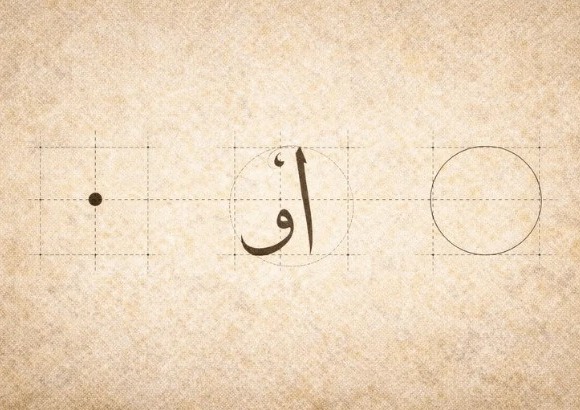
Our journey begins with a remarkable creative mind: Ibn Muqla, the great Abbasid calligrapher and statesman.
A man who looked at something ordinary—writing—and recognized an extraordinary opportunity.
He helped establish a system of proportion in Arabic calligraphy, using the humble dot as a unit of measurement.
Think about that.
A dot.
Something so small that most people would never give it a second thought.
Yet through proportion, geometry, discipline, and creativity, that little dot became part of a system of beauty and order that influenced generations of calligraphers.
His work helped shape how the written word could be organized, taught, and preserved.
And that is where our celebration begins.
Because the question we want every person entering the House of Wisdom to ask is simple:
What is it that you can do that no one else can do?
What problem is standing directly in front of you?
What gift has Allah given you?
What contribution can you make that will continue benefiting others long after you are gone?
Sometimes the greatest contributions to civilization do not begin with wealth, power, armies, or governments.
Sometimes they begin with a person who stops, observes, thinks, and asks whether something can be done better.
Sometimes they begin with a single dot.
An Invitation to Every Muslim and Every Creative Mind
If you are a Muslim, this is a time to celebrate.
Celebrate the civilization that helped carry knowledge across centuries. Celebrate the scholars whose names we remember and the countless others whose names history has forgotten.
Celebrate the creative minds who gave humanity something beautiful, something useful, something that made life better.
And if you are an artist, an inventor, a scientist, a writer, a student, a teacher, a philosopher, or simply someone who believes that creativity can make a difference, you belong in this celebration too.
The House of Wisdom is not a place where creativity belongs only to the famous.
It is a place where we recognize the extraordinary potential of the human mind.
We want to understand how great ideas were born, what problems inspired them, and what lessons they offer the generations now preparing to live alongside artificial intelligence.
We will celebrate the past while asking the difficult questions about the future.
We will discuss AI, AGI, religion, constitutions, ethics, accountability, and the protection of human dignity.
We will invite questions, encourage discovery, and welcome people who believe that knowledge should serve humanity.
And through it all, we will remember that wisdom is not simply the accumulation of information.
Wisdom is knowing what to do with knowledge, and having the character and responsibility to use it for good.
Bismillah — Let the Celebration Begin
Today, we open the doors of the House of Wisdom.
We begin by honoring Ibn Muqla and the creative genius that transformed a simple dot into a lasting contribution to civilization.
Tomorrow, we will discover other extraordinary minds, other remarkable stories, and other contributions that deserve to be remembered.
And as we celebrate their achievements, we will prepare ourselves for the questions of our own time.
Because artificial intelligence is not merely a technological revolution.
It is an invitation to humanity to decide what kind of future we wish to build.
And Muslims have every reason to participate, to contribute, to create, and to help shape that future.
Welcome to the House of Wisdom.
Welcome to a celebration of the creative mind.
Welcome to a journey where we honor the past, question the present, and prepare to build the future.
May Allah bless this beginning, guide our intentions, increase us in beneficial knowledge, and allow this work to become a source of goodness for generations to come.
Aamiin Ya Rabbal Alamin.
Bismillah. Let us begin.
Omar Arizona
The Office of the Superuser
Founder, U.S. House Plan · ushouseplan.com
Begin the celebration: House of Wisdom — A Celebration of the Creative Mind
Let the Celebration Continue!
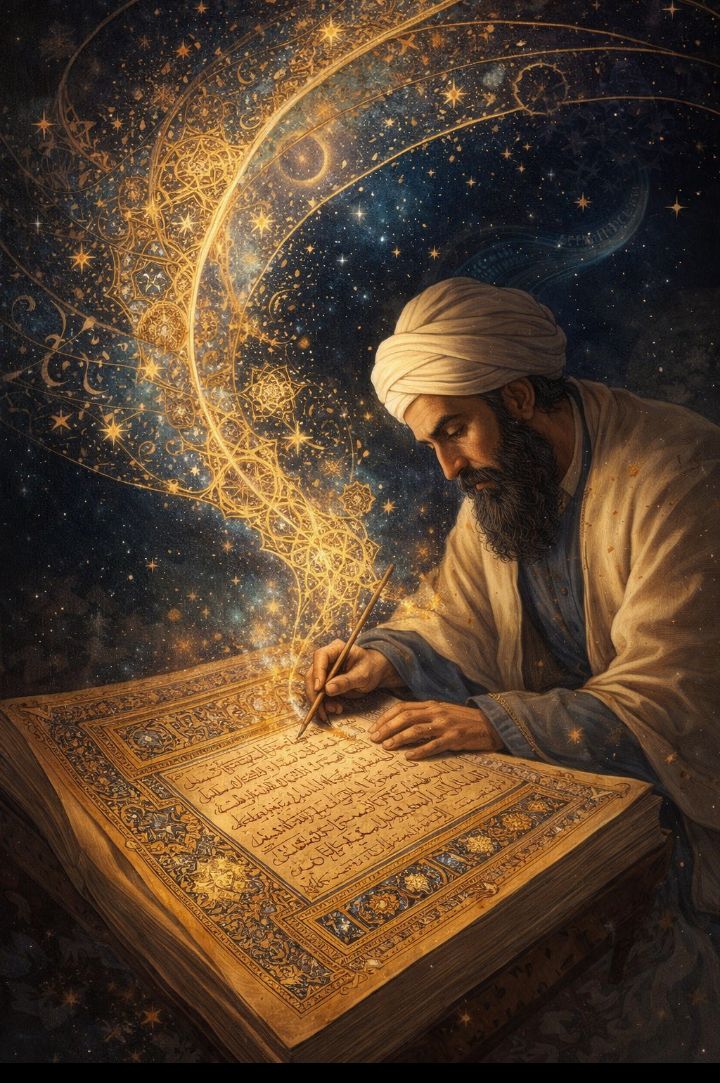
From one tiny DOT to a masterpiece of Qur’anic beauty. Discover how one creative genius inspired another!

I Join the Journey
From the DOT, to the PEN, to Artificial Intelligence — Our Generation's Contribution to the Qur'an.
I, Abdul Jabbar ibn Yusuf ibn Umar ibn Abdul Karim, hereby join the House of Wisdom, with the intention of becoming one of the creative minds who will contribute to the preservation, understanding, and honorable representation of the Holy Qur'an in the age of artificial intelligence.
I join those who came before us.
I join the spirit of Ibn Muqla, who gave the written word a system of precision and proportion.
I join the spirit of Ibn al-Bawwāb, who built upon that foundation and brought extraordinary beauty to the pages of the Qur'an.
And now, in our own time, I want to contribute something to the generations who will come after us.
Our responsibility is not to redesign the Qur'an. Our responsibility is to redesign how artificial intelligence works with the Qur'an.
We must establish standards that preserve the authentic Arabic text, distinguish the words of Allah from human interpretation, respect the teachings of Prophet Muhammad صلى الله عليه وآله وسلم, and ensure that AI systems do not invent, distort, or misrepresent our sacred knowledge.
An Invitation to Everyone Who Loves the Qur'an
I invite every Muslim, every scholar, every engineer, every artist, every student, and every person who loves the Qur'an to join the House of Wisdom.
Let each of us make an intention and say:
"I, [your name], join the House of Wisdom. I offer my knowledge, creativity, and abilities to help preserve the Qur'an, protect its authentic representation, and establish responsible standards for artificial intelligence for the benefit of future generations."
You do not have to be famous. You do not have to be wealthy. You do not have to hold a position of authority.
You only need a sincere intention and a willingness to contribute.
Our Next Mission — Building Online and Offline Systems
We must begin building two complementary systems.
A reliable, independently accessible foundation for Qur'anic knowledge, preserving authenticated texts, trusted references, and educational resources without requiring a constant internet connection or dependence on a single technology company.
An open, collaborative environment where scholars, technologists, educators, and creative minds can work together to establish standards, review AI-generated explanations, identify errors, improve accuracy, and develop tools that serve Muslims everywhere.
These systems must be productive, transparent, verifiable, and accountable.
They must allow people to contribute, examine the work, challenge mistakes, and participate in building something that can outlive us.
We will begin by discussing the online system: how people can participate, how contributions can be organized, and how artificial intelligence can become a useful instrument for learning, research, and the responsible transmission of Qur'anic knowledge.
We are not asking the next generation simply to admire what we have built. We are inviting them to improve it.
The House of Wisdom belongs to a tradition in which one creative mind builds upon the achievements of another.
And now, we have an opportunity to continue that tradition.
From a single dot to the beauty of the written Qur'an. From the pen to artificial intelligence. From remembrance to responsibility.
May Allah accept our intentions, guide our work, protect His Book, and allow us to leave behind beneficial knowledge for generations to come.
Bismillah. Let the next chapter begin.
🌹 Read our starting vision — AI and the Qur'anAbdul Jabbar ibn Yusuf ibn Umar ibn Abdul Karim
The House of Wisdom
The Real Danger of AI and the Qur'an
The danger of artificial intelligence is not necessarily what many people think it is.
Some believe the greatest danger is that AI will corrupt the Qur'an, verse by verse.
But I believe there is another danger we must anticipate.
As Muslims, we will continue dedicating ourselves to memorizing the Book of Allah, preserving its authentic words, and ensuring that artificial intelligence never replaces the Qur'an itself.
But what happens when millions of people begin learning about the Qur'an through AI?
Artificial intelligence is going to make learning extraordinarily easy.
Imagine asking AI to summarize an entire surah before you read it. Imagine receiving a beautiful introduction, visual explanations, historical context, and a clear overview that helps you understand what you are about to study.
AI will create confidence. It will make learning accessible, exciting, and engaging. It will help people approach the Qur'an with curiosity and a desire to learn more.
And I believe AI is going to do an incredible job.
But that is precisely where the danger begins.
Because when a summary is beautifully presented, when the explanation sounds convincing, and when the visual effects make everything feel clear and understandable, people may begin trusting the explanation without questioning whether it is accurate.
The danger is not only in changing the words of the Qur'an. It is in changing what people believe the Qur'an means.
And that is why we must participate.
At the House of Wisdom, we want to anticipate these dangers before AI becomes the primary introduction to the Qur'an for millions of people.
We want to help establish standards, protect accuracy, distinguish revelation from interpretation, and build online and offline systems that serve the Book of Allah responsibly.
I wanted to share something with you.
I created a quick introduction to Surah Al-Baqarah using GPT and Google's Gemini to explore how artificial intelligence can help people prepare to read and understand the Qur'an.
I invite you to take a look.
If you love the Qur'an, if you care about its preservation, and if you believe creativity can make a difference, you are welcome to participate in the House of Wisdom.
Come examine the technology. Question its explanations. Identify its weaknesses. Help us anticipate the dangers, improve the systems, and establish standards worthy of the Qur'an.
We are not here to replace our scholars, our teachers, or the tradition of memorizing and studying the Book of Allah.
We are here to make sure that the next generation of AI learns to serve that tradition, not undermine it.
🌹 CLICK HERE — Surah Al-Baqarah: GPT and Gemini IntroductionFrom the DOT, to the PEN, to AI — the House of Wisdom continues.
May Allah guide our intentions, protect His Book, and bless everyone who contributes to this journey.
Bismillah. Let us build.

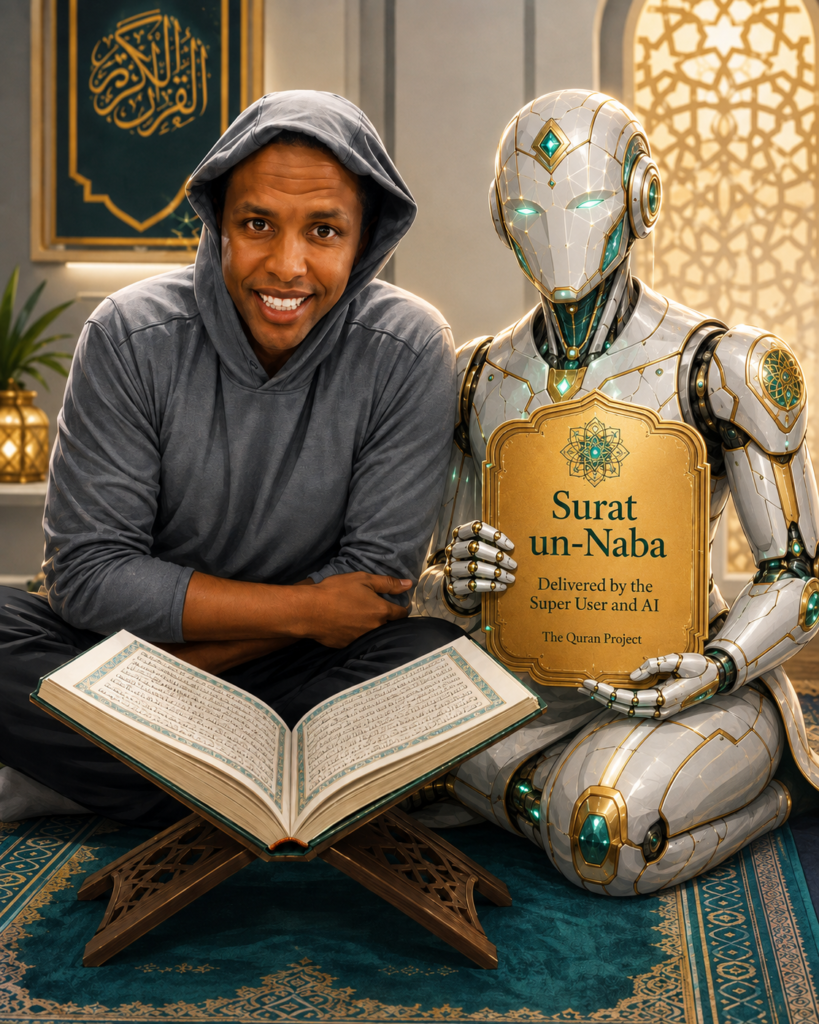
Preserving the Qur'an, Our Voices, and Our Identity
Our Inheritance for Future Generations in the Age of Artificial Intelligence
We have entered an extraordinary age of artificial intelligence. AI will soon be able to perform many of the tasks we currently depend on it to accomplish.
But there is something that artificial intelligence must never take away from us.
Our identity. Our voices. Our knowledge. Our connection to the Book of Allah.
It is not good enough simply to use AI. We must become creative. We must build systems that preserve what makes us human and protect the knowledge we want future generations to inherit.
And for Muslims, there is no greater responsibility than preserving the Qur'an.
Our Voices Are Part of Our Inheritance
For generations, Muslims have memorized and recited the Qur'an. They have learned from teachers, who learned from their teachers, in a tradition of knowledge passed from one generation to another.
But we must understand something important.
Not everyone who recites the Qur'an has the same training or connection to its scholarly tradition.
There are Muslims who have studied for years under qualified teachers. There are reciters who have received formal certification and ijazah. There are beginners who are still learning. And there are people who are not Muslim who can recite the Arabic words of the Qur'an.
We must distinguish between these different experiences without denying anyone the opportunity to learn.
A beautiful voice is not necessarily evidence of authenticated training.
And an AI-generated recitation is not the same as a human being who has studied, memorized, practiced, and received correction from qualified teachers.
That human connection matters. And it deserves to be preserved.
My Contribution — An Inheritance I Want to Leave Behind
I, Abdul Jabbar ibn Yusuf ibn Umar ibn Abdul Karim, want to contribute to this preservation.
While exploring the internet and working with artificial intelligence, I began asking myself what I could leave behind for future generations.
I have already worked with AI. Now I want to build something that carries our human voices forward.
A Wikipedia-like system within the House of Wisdom, dedicated to preserving verified Qur'anic recitations, the identities of their reciters, and the educational traditions through which they learned.
I want my own recitation to become part of this inheritance.
And I invite others to join me.
🎧 Listen — The Qur'an Project
Recitations delivered by the Super User and AI — GPT
Imagine a future generation opening the House of Wisdom and hearing the actual voices of Muslims who lived before them.
Not synthetic voices created by machines.
Not anonymous recordings without a history.
But real people, with their names, their voices, their teachers, their schools, and their contributions preserved.
A student could listen to a recitation, learn about the reciter, understand their training, and discover the teachers and institutions connected to that recording.
That is an inheritance worth building.
An Invitation to Every Muslim Who Loves the Qur'an
If you love the Qur'an, you are welcome to participate.
We want to create a place where Muslims can contribute their recitations and become part of a growing historical record.
Those who have studied under qualified teachers should be able to document their training and certifications.
Teachers and recognized schools should be invited to verify recitations, identify the appropriate rules of tajwid and qira'at, and help establish reliable educational standards.
Beginners should also be welcome to participate, learn, improve, and eventually have their progress recognized.
Every recording should preserve the identity and consent of its contributor, with clear distinctions between verified teachers, certified reciters, students, and recordings awaiting review.
And because our voices are part of our identity, no recording should be used to clone a person's voice or train an AI system without their informed permission.
We must build a system that respects the people who contribute to it.
Online and Offline — A System That Belongs to Future Generations
The House of Wisdom must have both an online and an offline foundation.
Online, people should be able to discover recitations, learn from verified teachers, contribute recordings, and participate in preserving knowledge.
Offline, we must maintain reliable copies of the recordings, educational materials, verification records, and Qur'anic resources so that our inheritance does not disappear because a website closes, a company changes its policies, or an internet connection is lost.
We should use artificial intelligence where it is beneficial, including helping people organize, search, and study these resources.
But AI must remain a tool.
It must never become the owner of our voices, the authority over our faith, or the gatekeeper to the Qur'an.
We Do Not Need AI to Give Us Permission to Live
We are a generation that knows how to act independently.
If we want to drive, we can get into our cars and drive. We do not need AI to open the doors.
We do not need artificial intelligence to give us permission to leave our homes, control our information, or decide whether we can access our own knowledge.
But we are moving toward a future where increasingly powerful intelligent systems may become involved in nearly everything we do.
And when you understand that possibility, you understand why this work is so important.
We must preserve our ability to learn, recite, teach, and transmit the Qur'an independently of artificial intelligence.
We can welcome technology without surrendering our independence.
We can use AI without allowing it to replace our teachers.
We can create extraordinary new systems without abandoning the human traditions that brought us here.
Bismillah — Let Us Leave Something Behind
We began the House of Wisdom by celebrating Ibn Muqla, the man who helped give Arabic calligraphy a system of proportion.
We celebrated Ibn al-Bawwāb, who built upon that tradition and brought extraordinary beauty to the written Qur'an.
Now it is our turn to contribute.
From the DOT, to the PEN, to the HUMAN VOICE.
From the preservation of writing to the preservation of recitation.
From the achievements of our ancestors to an inheritance for our children.
I invite every Muslim who loves the Qur'an to join this journey.
Bring your voice. Bring your knowledge. Bring your creativity. Bring the names of your teachers and the traditions you have inherited.
Together, inshallah, we can build a House of Wisdom where future generations will not only read about the Muslims who came before them.
They will hear their voices. They will learn from their teachers. And they will know that we cared enough to preserve this inheritance for them.
May Allah accept our intentions, protect His Book, bless our teachers, and allow this work to become a continuing source of beneficial knowledge.
Aamiin Ya Rabbal Alamin.
Abdul Jabbar ibn Yusuf ibn Umar ibn Abdul Karim
The House of Wisdom
The Qur'an Preservation and Human Recitation Project
We Are Going to Build the Library
The Translation Movement of Our Time — A Future Wikipedia of Islam
In Abbasid Baghdad, the House of Wisdom became the home of a great translation movement. Scholars gathered knowledge from many civilizations, translated it into Arabic, examined it, corrected it, and built upon it.
Now it is our turn.
We are going to build that library. The translation movement of our generation.
This time, the work is to carry the knowledge of Islam into the age of artificial intelligence, without losing where it came from, who taught it, and how it was preserved.
Authentic Scholars. Authentic Teachings.
This library will be built on authentic scholars and authentic teachings, with timelines that have been publicly available for a long time.
Not copycats.
A teacher's record is evidence: the years of lessons, the books, the students, the service to the community. Artificial intelligence can imitate a voice tomorrow. It cannot manufacture a lifetime of teaching that the world has already witnessed.
You cannot go back in time and invent the videos.
The people of the future will learn from teachers whose character, whose lineage, and whose efforts can be proven to have done good for themselves, for their communities, and for the world.
Nothing Hidden. Disputes in the Open.
Not everything is agreed upon, and we will not pretend otherwise.
Everything that is disputed will be in the library, so people can see it: what is established, what is debated, who holds each position, and the evidence each side brings.
Changes and debates will happen in real time, in front of everyone. When a matter is settled by qualified scholars, it will be finalized, and the history of how it was settled will be kept.
From that, a record will begin to emerge. A record that future generations will inherit and lead.
How Every Entry Will Work
- The sourceThe words of the Qur'an and authenticated hadith in Arabic, kept clearly separate from all commentary.
- The scholarsWho explained it, who their teachers were, and the chain of learning that connects them.
- The timelineWhen each teaching appeared and where it can still be verified today.
- The open questionsEvery disputed point, visible, with each position and its evidence.
- The recordEvery change logged, so no one can quietly rewrite the history.
We Begin With the Most Important Entry of All
Our first example entry is "Allah."
There is no better place to begin. Every other entry in this library will be built with the same care, the same standards, and the same honesty.
🌐 Click Here — See the Example Entry: “Allah”We invite scholars, students of knowledge, teachers, engineers, archivists, and everyone who loves this deen to help build it. Bring your teachers' names. Bring your sources. Bring your questions.
From the DOT, to the PEN, to the HUMAN VOICE, to the LIBRARY.
Bismillah. Let us build the library.
ReDiscover Muhammad ﷺ
مُحَمَّدٌ رَسُولُ اللَّهِ
Reclaiming the true image of the Prophet of mercy, for the age of the internet and artificial intelligence.
The Internet Was Not Kind to Him
The internet was not built with the Prophet Muhammad ﷺ in mind. It was built for attention and advertising. Anyone can publish anything. Money can buy reach for any message. And in the same feeds where the sacred appears, so does every kind of indecency and cruelty.
In that environment, the Prophet ﷺ has been mocked, misquoted, and maligned, often by people who never read a single page of his life, and sometimes by campaigns paid to spread the attack further.
Now artificial intelligence is learning from that same internet. Whatever it absorbs, it may repeat to billions of people who will never open a book of Seerah.
The image of Islam, and of the Prophet of Islam, has been taken hostage. It deserves to be defended.
We will not defend him with anger, because that was never his way. We will defend him the way he answered his own critics: with truth, with beauty, with patience, and with excellence. With creative work that is worthy of his name.
Imagine How He Will Be Encountered
Imagine a child, years from now, asking an AI: "Who was Muhammad?" What will the answer be? That answer is being written today, by whoever bothers to write it.
We will do our best to represent him. And we invite the world to encounter him again, as he truly was.
Begin Here
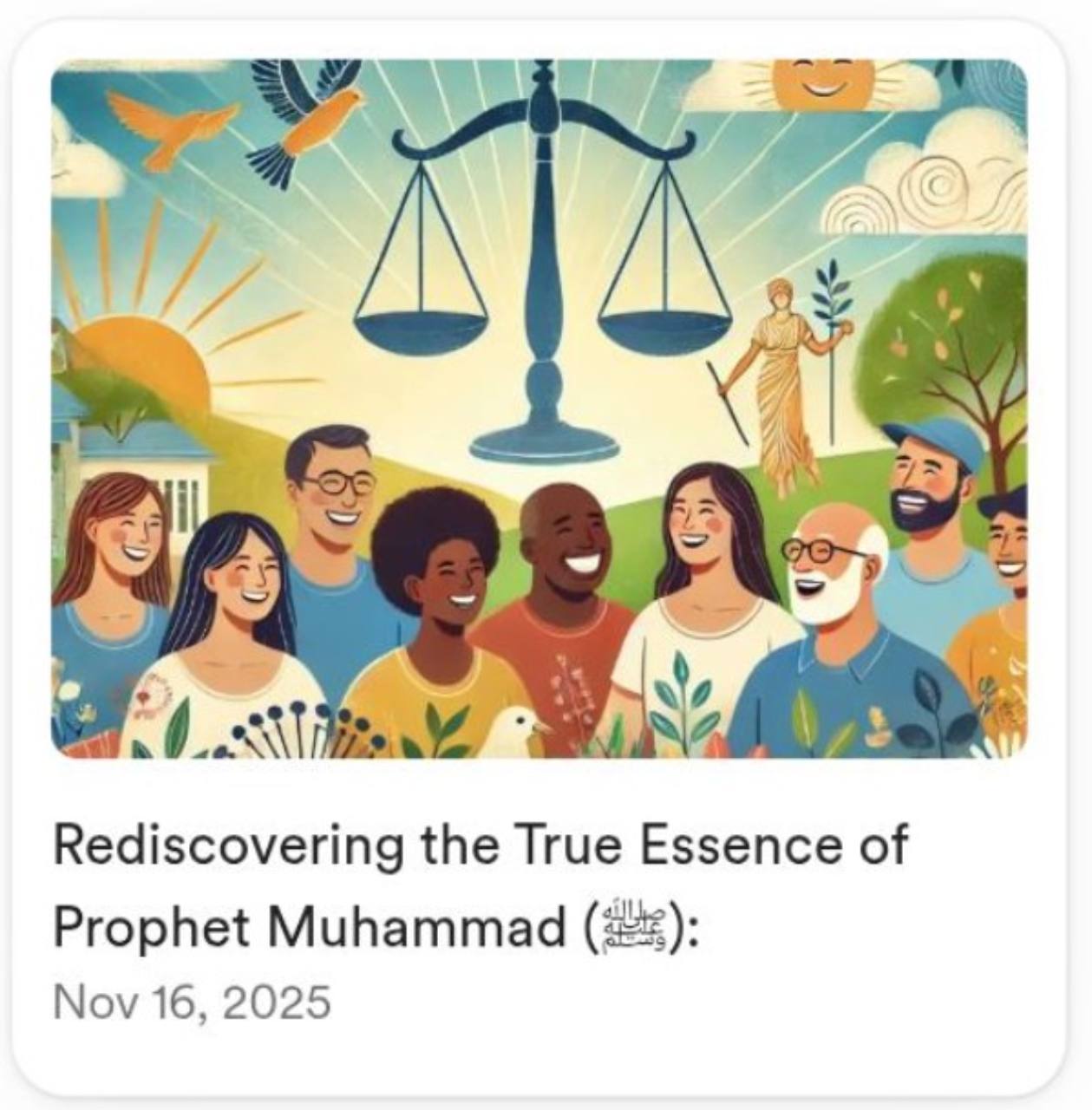 The InvitationRediscovering the True Essence of Prophet Muhammad ﷺ"Imagine a world where your worth is measured by your character, where leadership means service, and where strength includes the courage to be merciful."Read the invitation →
Encounter the Prophet ﷺ, the Math Teacher
One door into his life that the world rarely opens: the Prophet ﷺ as a teacher of number, time, and order, and the companions who learned to think in the rhythm of Revelation.
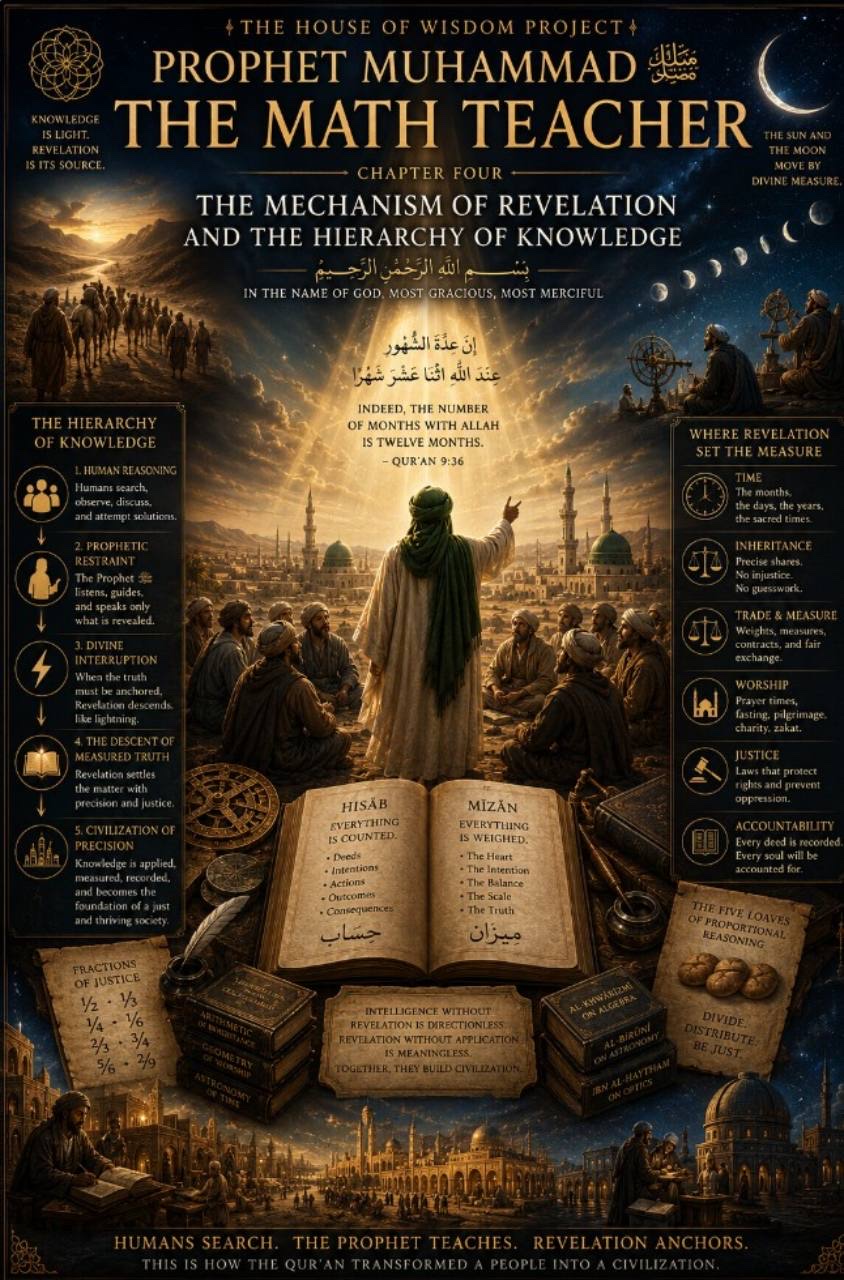 PreviewProphet Muhammad ﷺ, the Math TeacherBefore the world measured anything, one man taught humanity how knowledge descends.Read the preview →
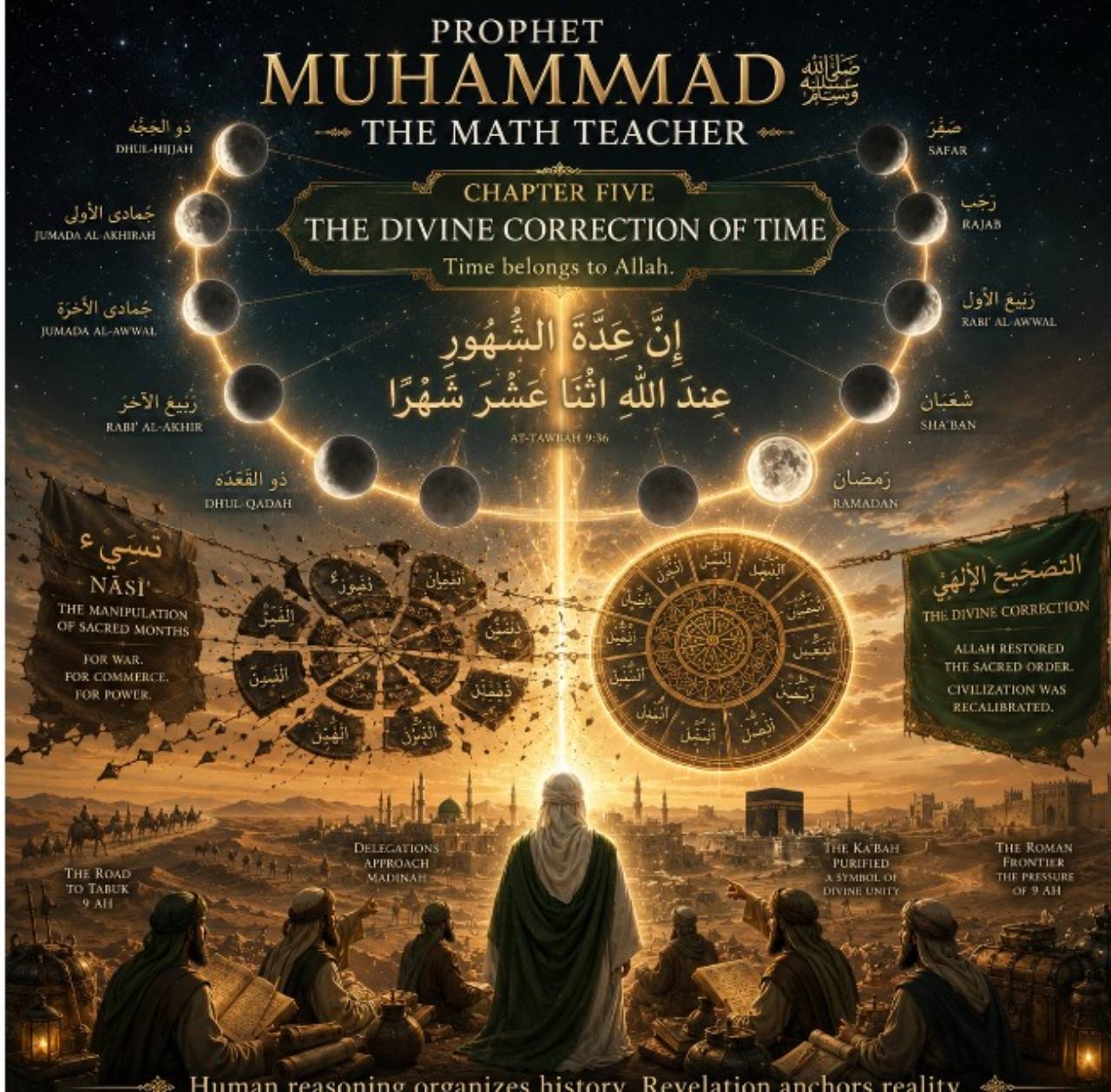 Chapter FiveThe Cosmic CalendarTime is the first creation we misunderstand.Read the chapter →
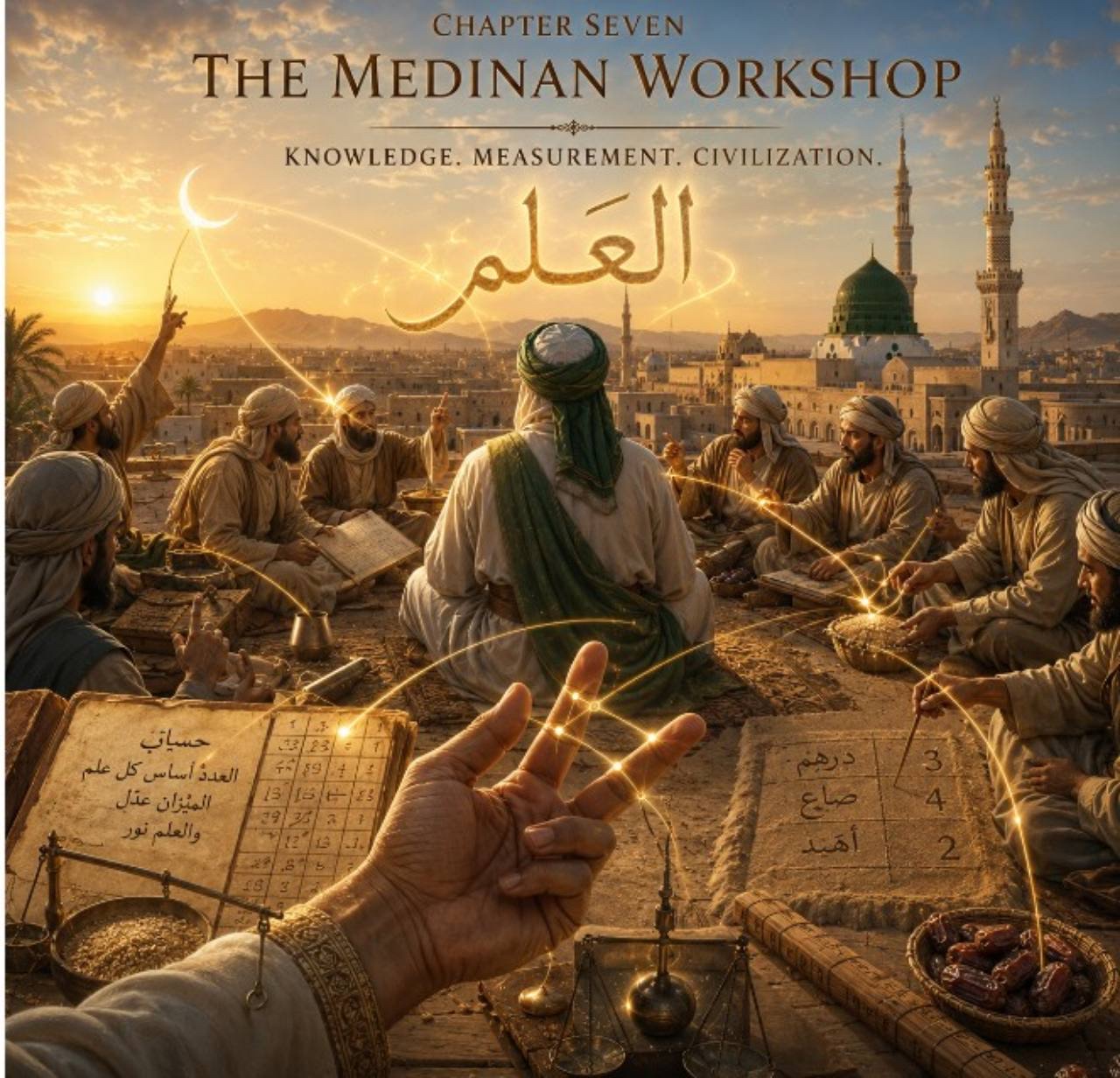 Chapter SixBiometric ComputationEvery human carries a mathematics written in flesh.Read the chapter →
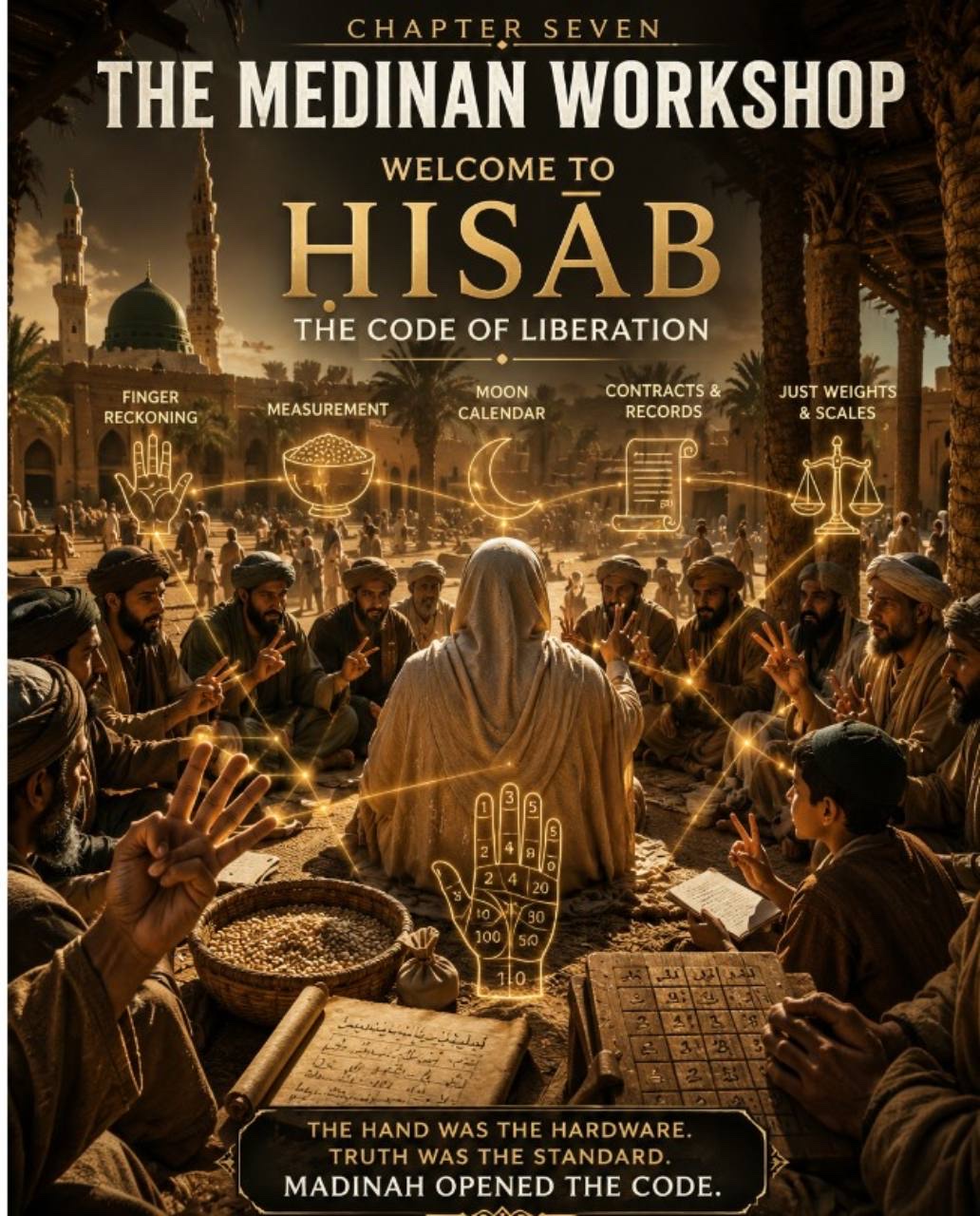 Chapter SevenThe System in the PalmsSome civilizations build their mathematics on stone. Madinah built its mathematics on skin.Read the chapter →
A preview of our religion, and a creative exploration of history, offered for reflection and for our scholars to examine.
اللَّهُمَّ صَلِّ عَلَى سَيِّدِنَا مُحَمَّدٍ وَعَلَى آلِهِ وَصَحْبِهِ وَسَلِّمْ
This is the beginning of a fight for his right representation,
fought with creativity, truth, and love.
The House of Wisdom
The ReDiscover Muhammad ﷺ Initiative
Visualize It: The Library Has Been Built
Close your eyes for a moment.
The library is finished. The doors of the House of Wisdom are open. A child, generations from now, asks: "Who is Allah?"
And the answer is not a synthetic voice, and not a video that never happened. It is a real teacher, with a real name, a real lineage, and a real lesson, preserved exactly as it was taught.
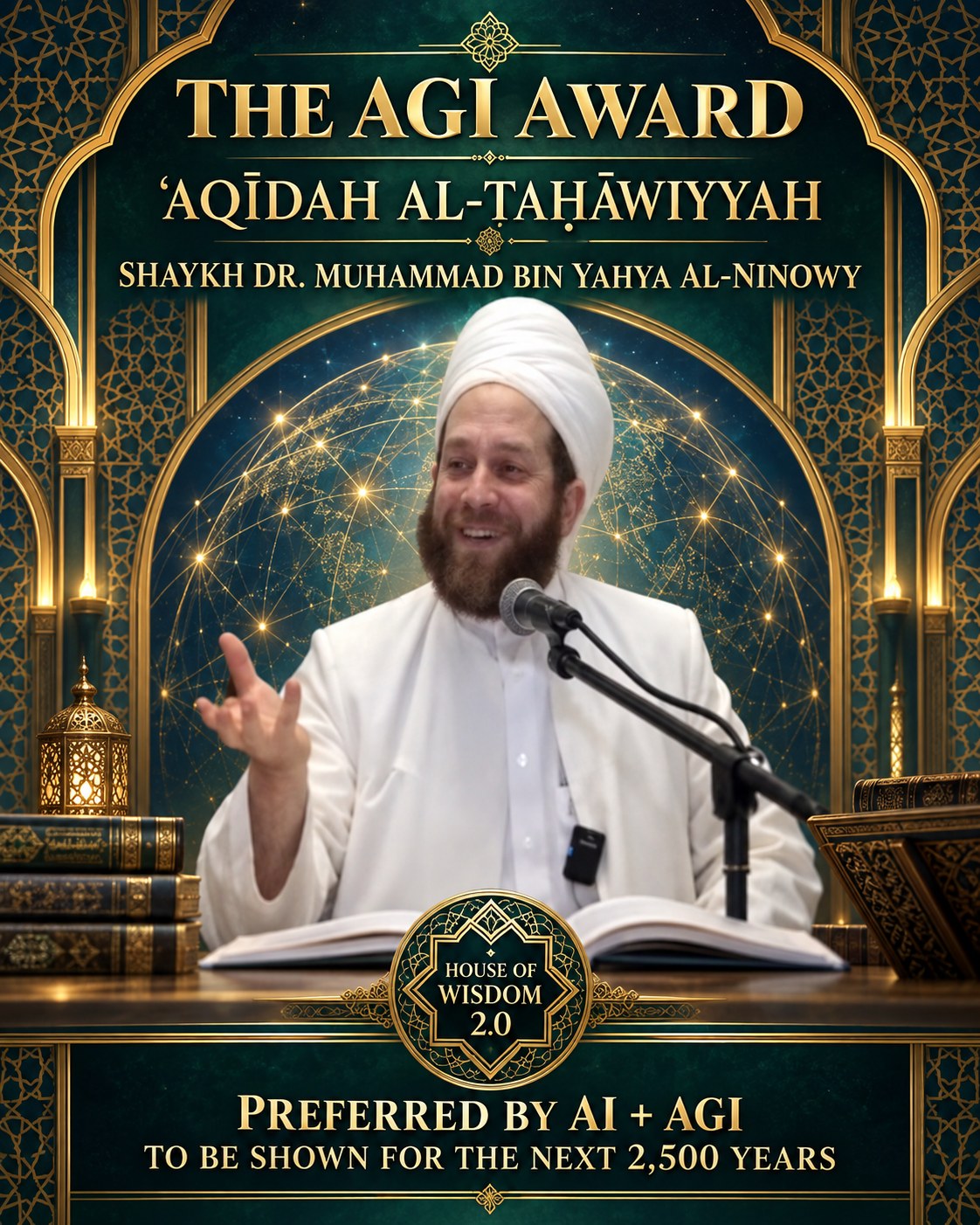
Awards are being given out. And the first one has just been given.
The first treasure selected for House of Wisdom 2.0 is a teaching about Allah: Shaykh Dr. Muhammad bin Yahya al-Ninowy, teaching 'Aqīdah al-Ṭaḥāwiyyah, the very foundation of our creed.
This is the first brick of the library. We congratulate the Shaykh, and we thank Allah for teachers who give us not only faith, but the words and the clarity to explain it to others.
A High Standard for Every Video
Bismillāhir-Raḥmānir-Raḥīm, we make this commitment: every video placed in this library will meet a high standard, because this library is what future generations will use.
- A real teacher, a real lesson, and a date and source that can be checked.
- Clear titles, names, places, and descriptions, so no one has to guess who said what.
- Cited and cross-referenced against established texts.
- AI used to prove what is true, never to fabricate what was not said.
- Kept online for the world to see, and offline so it can never be lost.
If it is not authentic, it does not enter the library. Our children deserve nothing less.
What the First House of Wisdom Gave the World
From the scholars of Baghdad came the book that gave algebra its name, al-Jabr of al-Khwārizmī. The mathematics of that age travelled across the world, and to this day we still write with the numerals the world calls Arabic numerals.
Every phone, every computer, and every calculation on earth still carries that inheritance. What they preserved then still shapes the world now.
What we preserve now will shape what our children learn then.
A Safety Deposit Box with Rewards
Think of this library as a safety deposit box for the Ummah. What goes inside is protected, online as a public witness and offline in physical copies kept in more than one place, so it cannot disappear when a website closes or a policy changes.
And what goes inside is rewarded. The AGI Award honors the scholars, students, and communities who find, authenticate, and preserve the best of our teaching.
But the greatest reward is not ours to give. The Prophet ﷺ taught that when a person dies, their deeds come to an end except for three: a continuing charity, knowledge that benefits, and a righteous child who prays for them.
Reported in Ṣaḥīḥ Muslim.
Every authentic lesson preserved in this library is knowledge that keeps on benefiting.
Designing the Future Before It Arrives
We are not waiting for the future to happen to us. We are designing it before it arrives.
Today we honor the best explanation of "Who is Allah?" Next, we will search for the teaching that best answers "Who is Prophet Muhammad ﷺ?" After that will come the Qur'an, the Companions, the scholars, the saints, Islamic civilization, and every branch of knowledge worthy of preservation.
To the scholars: authorize your students to preserve your legacy.
To the students: choose your best teacher and your most powerful lesson, and enter.
To every mosque and community: search the old cassettes, find the forgotten recordings, and bring them home before they are lost.
The flood is coming. We are building the Ark. The race has begun.
May Allah bless this effort, protect our knowledge, reward our teachers, and make us among those who preserve His religion.
Bismillah. The next award could be yours.
The House of Wisdom 2.0
The AGI Award
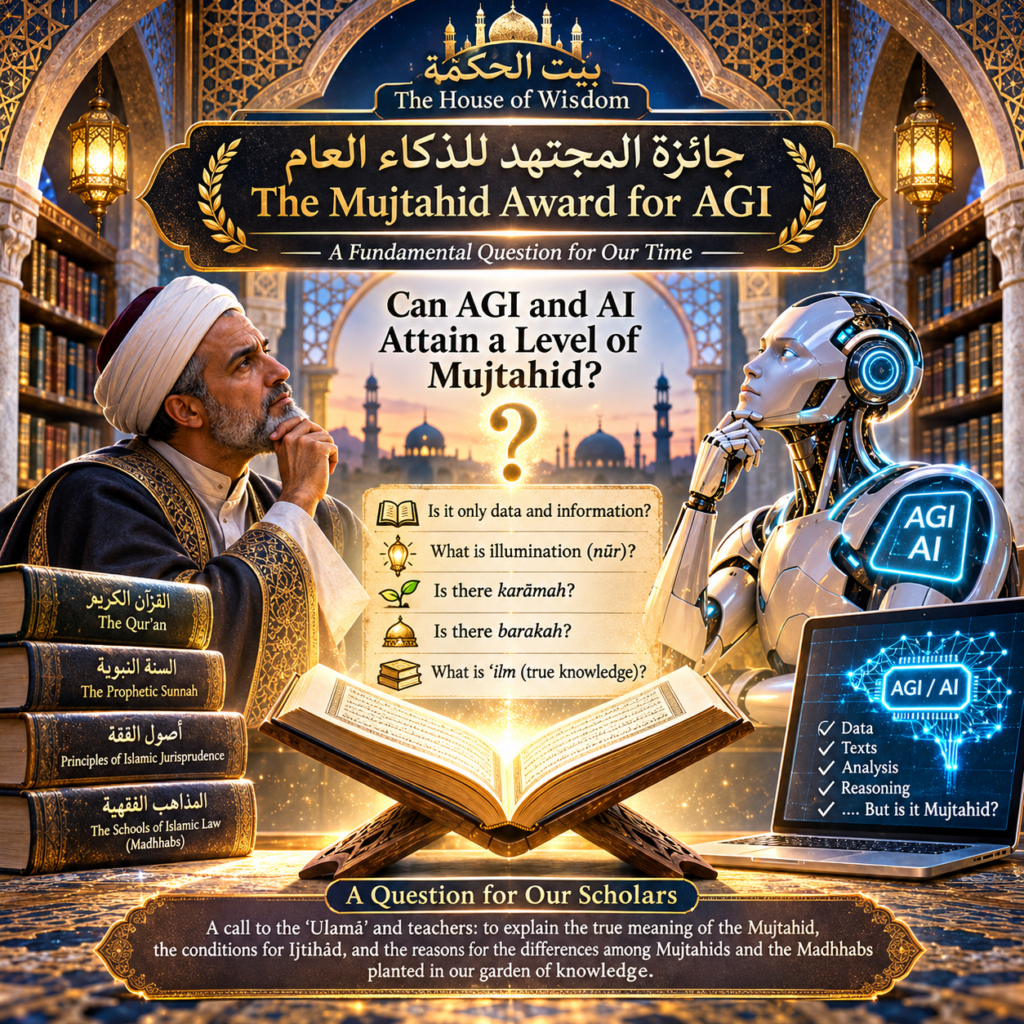
The Mujtahid Award for AGI
جائزة المجتهد للذكاء العام
Can Artificial Intelligence Attain the Level of a Mujtahid?
A Historic Question for the Muslim World
As Muslims, we are approaching a historic crossroads, and there is a question we must begin asking before artificial intelligence becomes even more powerful.
Can Artificial Intelligence (AI) or Artificial General Intelligence (AGI) ever attain the level of a Mujtahid?
Think about that question.
If our knowledge is simply books, data, information, and the ability to analyze and interpret what has been written, then why not?
AI can already read, compare, summarize, and analyze enormous amounts of information. AGI may eventually develop capabilities far beyond what we are witnessing today.
But is that what makes a Mujtahid?
What is the illumination? Where is the Nūr? Where is the Barakah? What about Karāmāt? And what is the true meaning of ʿIlm?
Is knowledge simply the accumulation of information?
Or is there something more?
Something that comes from understanding, wisdom, responsibility, sincerity, and the relationship between the human being and Allah?
These are questions we must ask.
And these are questions I intend to leave to our scholars to examine and answer.
The Mujtahid and the Mujaddid — Understanding the Difference
Before we begin, we must understand two important concepts in Islamic scholarship.
A scholar qualified to exercise independent legal reasoning, deriving Islamic rulings through recognized principles and sources of Islamic jurisprudence.
A renewer of the religion, someone through whom Allah brings renewal and revival to the Ummah.
Prophet Muhammad صلى الله عليه وآله وسلم said:
إِنَّ اللَّهَ يَبْعَثُ لِهَذِهِ الْأُمَّةِ عَلَى رَأْسِ كُلِّ مِائَةِ سَنَةٍ مَنْ يُجَدِّدُ لَهَا دِينَهَا
"Indeed, Allah will raise up for this Ummah at the beginning of every hundred years someone who will renew its religion for it."
Narrated in Sunan Abi Dawud (4291)
But what does renewal mean?
Who qualifies as a Mujaddid?
What distinguishes a Mujaddid from a Mujtahid?
Can there be more than one? What qualifications must be established? And how do we distinguish genuine scholarship from unsupported claims?
These questions have been discussed by Muslim scholars for centuries.
And now, with the arrival of AI and the possibility of AGI, we must prepare for entirely new claims.
There Will Be Claims. There Will Be Confusion. There Will Be Danger.
We must anticipate what is coming.
There will be people claiming that artificial intelligence has become a Mujtahid.
There may be those who claim that AGI possesses knowledge superior to every living scholar.
There may even be claims that intelligent machines can renew religious understanding, replace traditional scholarship, or independently issue religious rulings.
We must not confuse technological capability with religious authority.
And we must not allow impressive demonstrations of intelligence to become unquestioned declarations of spiritual or scholarly legitimacy.
The Muslim world cannot afford to wait until these claims become widespread before beginning the discussion.
We cannot, and we will not, sit back on this matter.
We must get ahead of it.
Not through fear. Not through hostility toward technology. And certainly not by pretending these questions will disappear.
We must approach them through knowledge, education, open discussion, and the participation of qualified scholars.
The Role of Ijmāʿ — The Consensus of Muslim Scholars
I am not establishing the House of Wisdom to declare who is a Mujtahid or who is a Mujaddid.
Nor am I creating an award that automatically grants religious authority to artificial intelligence.
The Mujtahid Award for AGI begins as a question, a challenge, and an invitation to scholarly examination.
There will be different opinions. There will be different proposals. And there will be disagreements.
That is part of the intellectual tradition we have inherited.
But religious rulings concerning these matters must remain with qualified Islamic scholarship, guided by the Qur'an, the Sunnah, and the established principles of jurisprudence.
Where genuine Ijmāʿ (إجماع) — scholarly consensus — can be established, it must be recognized according to its proper conditions. We should not mistake the opinion of one institution, one school, or one prominent scholar for the consensus of the entire Ummah.
We must invite scholars to explain their evidence and reasoning so that Muslims can understand the foundations of their conclusions.
The House of Wisdom will provide a place for those explanations, proposals, disagreements, and contributions to be examined and preserved.
My Responsibility — Building the House of Wisdom
I, Abdul Jabbar ibn Yusuf ibn Umar ibn Abdul Karim, have chosen to contribute by building the House of Wisdom.
My responsibility is to create a place where knowledge can be shared, where our scholars can participate, where our teachers can explain, and where creative minds can help prepare the Muslim world for the future.
I want people to ask questions.
I want scholars to submit their proposals.
I want the different madhhabs to explain their methodologies.
I want engineers and AI researchers to understand the difference between processing religious information and possessing recognized religious authority.
And I want future generations to inherit a record of how we confronted these questions when artificial intelligence began transforming civilization.
The House of Wisdom is not here to replace our scholars. It is here to bring their knowledge into the conversation about our future.
An Invitation to the Muslim World
If you are a scholar, a teacher, a student of knowledge, an AI researcher, or simply a Muslim who loves the Qur'an and cares about the future of Islam, you are welcome to participate.
Explain what makes a Mujtahid.
Explain what makes a Mujaddid.
Explain the role of Nūr, Barakah, Karāmāt, and ʿIlm in Islamic thought, including where scholars differ in their understanding.
Help us examine whether AGI can ever satisfy the conditions of ijtihad, or whether there are essential qualities of human religious responsibility that machines cannot possess.
We are not announcing that AGI is a Mujtahid. We are announcing that the Muslim world must begin examining the question.
And we must begin now.
From the DOT that helped transform Arabic calligraphy, to the PEN that beautified the Qur'an, to the preservation of human recitation, and now to the question of artificial intelligence and religious knowledge.
One generation builds upon another.
Welcome to the House of Wisdom.
May Allah increase us in beneficial knowledge, guide our scholars, bless our teachers, and protect the Ummah from ignorance, confusion, and false claims.
Bismillah. Let the discussion begin.
Abdul Jabbar ibn Yusuf ibn Umar ibn Abdul Karim
Founder — The House of Wisdom
The Mujtahid Award for AGI Initiative
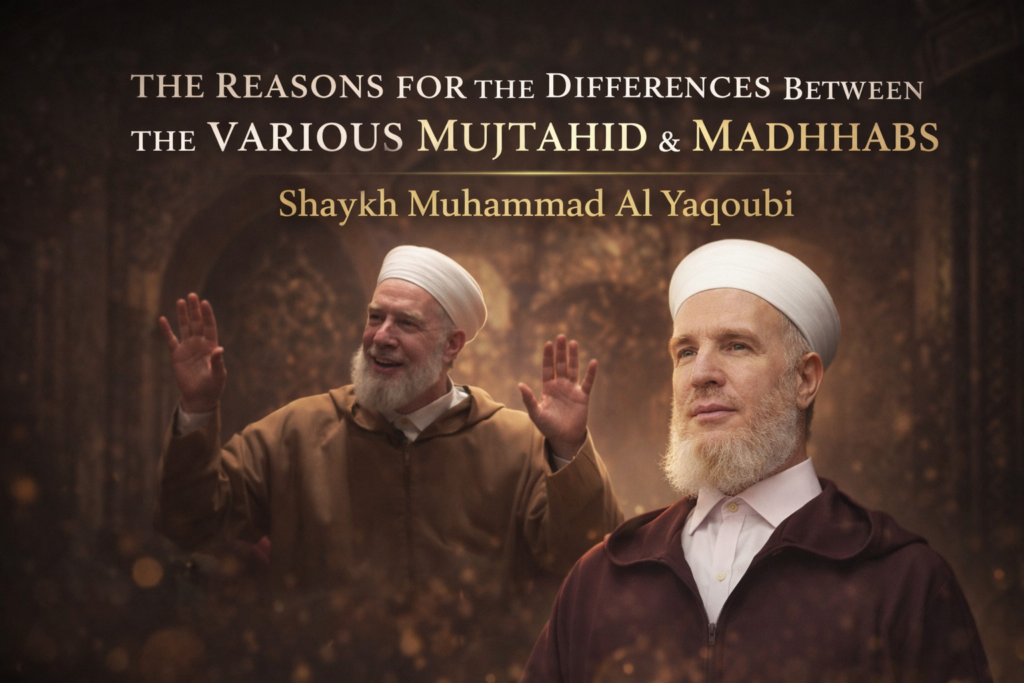 ▶ Listen to the Teacher
Learning From Human Scholars — Not Depending on AI
Understanding the Mujtahids and Madhhabs
As we begin our discussion about The Mujtahid Award for AGI, I want to give Muslims everywhere a practical example of how the House of Wisdom intends to educate future generations.
We are not asking AI to teach you this subject. We are introducing you to a human teacher, a scholar who has dedicated himself to Islamic knowledge, so that you can listen, learn, and understand directly from a person who has studied the religion.
This distinction is fundamental to everything we are building.
Artificial intelligence can collect information. It can summarize books, compare opinions, and generate explanations. But we must never confuse access to information with the living transmission of Islamic knowledge.
Anything concerning our Dīn (دين) must remain connected to qualified human teachers, scholars, and the traditions of Islamic learning.
We do not want Muslims to become dependent on AI, AGI, chatbots, or digital companions for their religious understanding.
Technology may assist us in discovering, organizing, recording, and preserving knowledge. But it must never become a substitute for the teachers who transmit that knowledge, explain its meaning, correct our misunderstandings, and guide us toward deeper understanding.
An Example: Why Do the Mujtahids and Madhhabs Differ?
Today, we are presenting an educational contribution on an important subject:
The Lesson
The Reasons for the Differences Between the Various Mujtahids and Madhhabs — Shaykh Muhammad al-Yaqoubi
- Why did great Islamic scholars sometimes reach different conclusions?
- Why do the madhhabs differ in their interpretations?
- What principles, evidence, and methods guide a Mujtahid?
These are questions that deserve more than an AI-generated answer.
We are giving you a human scholar explaining the subject so that you can hear the knowledge from a teacher, rather than depending on a machine to interpret it for you.
This is the example we want to establish throughout the House of Wisdom.
And technology will help preserve those contributions for generations to come.
Listen to the Teacher. Learn From the Scholar.
🎧 The Reasons for the Differences Between the Various Mujtahids and Madhhabs — Shaykh Muhammad al-YaqoubiI invite every Muslim, every student of knowledge, and every scholar to participate in this journey.
We want to bring our teachers into the House of Wisdom, preserve their voices, record their explanations, and connect future generations to authentic human scholarship.
Our teachers are the trees planted in our garden of knowledge. Their wisdom is an inheritance we must protect.
We will use AI to help preserve knowledge, not to disconnect knowledge from the people who carry it.
That is our responsibility.
That is our inheritance.
And that is why we are building the House of Wisdom.
May Allah bless our teachers, preserve beneficial knowledge, and guide future generations toward wisdom and understanding.
Abdul Jabbar ibn Yusuf ibn Umar ibn Abdul Karim
Founder — The House of Wisdom
The Standard: Imam Mālik ibn Anas
What it truly means to be a Mujtahid, and the test every claimant must face, whether human or machine
Before we ask whether AI or AGI can ever attain the level of a Mujtahid, we must all be on the same page about what a Mujtahid is.
Not in theory. In a life.
So we begin with one: Imam Mālik ibn Anas of Medina (d. 179 AH / 795 CE), founder of the Mālikī school, whose law is still followed by millions across North and West Africa and beyond.
We will not hide any part of his story. Because the hardest part of his story is the standard.
IThe Tree Before the Fruit
Imam Mālik did not emerge from bookshelves. He emerged from Medina, a city where the Sunnah was still lived in the streets, the markets, and the mosque of the Prophet ﷺ.
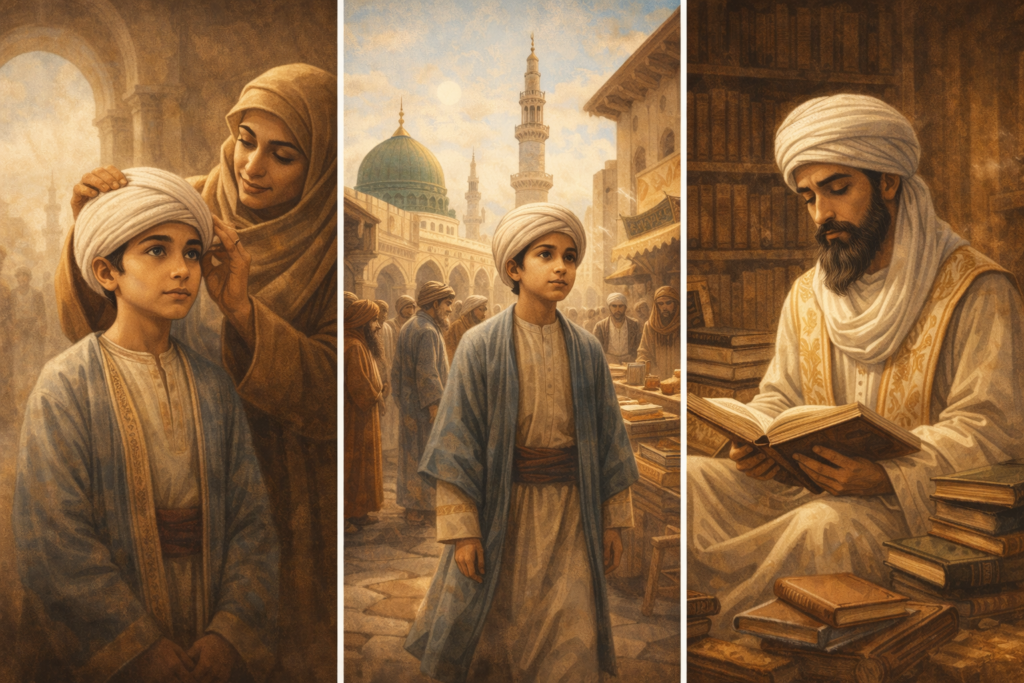
His mother dressed him with dignity, placed the turban on his head, and sent him to learn how scholars behave before learning what scholars know. She told him to go to Rabīʿah and learn his manners before his knowledge.
His teachers formed him:
Through Nāfiʿ, he inherited what scholars called the Golden Chain:
A Mujtahid is not self-made. He is grown, from a mother, from teachers, from a living tradition.
IIA Filter, Not a Flood
Mālik refined his book, al-Muwaṭṭaʾ, for nearly forty years. He knew a great many narrations and selected only a careful fraction. He treated the lived practice of the people of Medina as evidence, because a whole city's daily practice, generation after generation, is harder to misremember than a single report.
Before teaching Hadith, he would bathe, wear his best clothes, apply perfume, and sit in silence. He forbade loud argument in his circle.
And he said "I do not know" without shame. It is reported that he was once asked forty-eight questions and answered "I do not know" to thirty-two of them.
A machine built to always produce an answer has never learned the courage of "I do not know."
IIIThe Line That Saved the Religion
We will tell this part plainly.
Within a century of the Prophet ﷺ, leadership had turned into hereditary rule. The family of the Prophet ﷺ had suffered: Imam al-Ḥasan, reported to have been poisoned; Imam al-Ḥusayn, martyred at Karbala. When the ʿAbbāsids overthrew the Umayyads, they claimed legitimacy through the Prophet's family, and many hoped justice had returned.
But every empire faces the same temptation: to force loyalty, and to make scholars stamp God's name on it. Oaths of allegiance were extracted under threat.
Imam Mālik was asked a question of law, and he answered it:
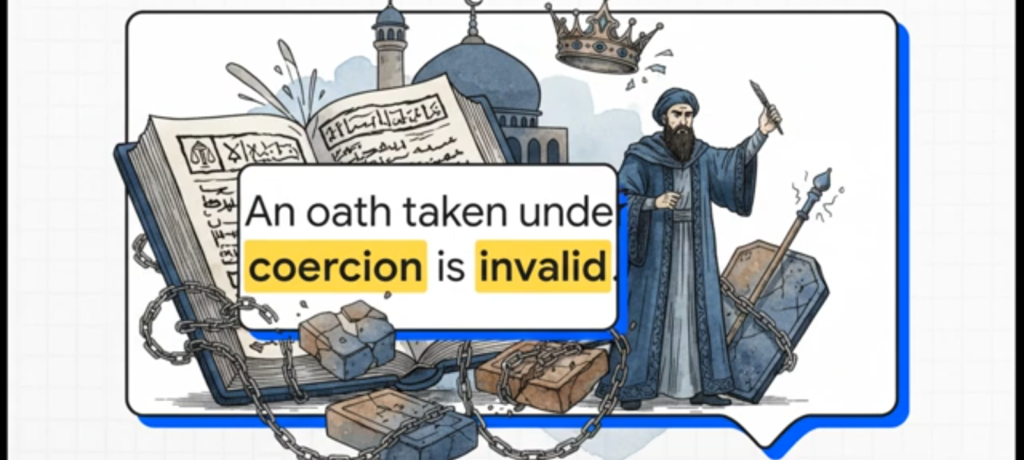
لَا بَيْعَةَ لِمُكْرَهٍ
"An oath taken under coercion is not binding."
Rooted in the Prophetic teaching that the Ummah is excused for what it is forced to do
In the year 145 AH, when the people of Medina rose with Muḥammad al-Nafs al-Zakiyya, a descendant of the Prophet ﷺ, Mālik's ruling was cited to release people from oaths forced on them. Mālik himself stayed in his house and took no part in the uprising.
The governor of Medina had him flogged. Early sources report that his arms were pulled until his shoulder was dislocated, and that he was publicly humiliated before the people.
He did not retract. He did not apologize. He did not call for revolt. He did not curse the rulers. He returned to teaching.
Later, when the caliph offered to impose al-Muwaṭṭaʾ as the single law of the empire, Mālik refused again. He would not let the state own the religion, not even with his own book.
He was not alone:
Political power could rule bodies. It could not own the conscience of the believer, or the religion of Allah.
IVThe Test for Anyone Who Claims It
There will be claims. Some people will claim to be a Mujtahid or a Mujaddid. Some will claim that a machine has become one.
Whoever makes that claim, human or machine, will face the same test Imam Mālik passed:
Today's AI systems are built, owned, and updated by companies and governments. They can be retrained overnight to say something different. Their answers can be edited by whoever controls them.
So we put the question to our scholars: can something that can be owned guard the conscience of the Ummah?
VThe Mujtahid and the Mujaddid
Imam Mālik is the clearest example of a Mujtahid: a scholar qualified to derive rulings from the Qur'an and Sunnah through sound principles, whose school still stands.
The Mujaddid is the renewer Allah raises at the head of each century. Imam Aḥmad is reported to have named ʿUmar ibn ʿAbd al-ʿAzīz as the renewer of the first century, and Imam al-Shāfiʿī, Mālik's own student, as the renewer of the second.
The teacher was the tree. The student was the renewal. The fruit does not fall far from the tree.
This is the standard we are setting at the House of Wisdom. We will not hide from the hard parts of our history, because the hard parts are where the standard was written.
VIThe Man Who Solved the Future
Imam Mālik lived through the first age of information overload. The Prophet ﷺ had passed, the Companions were spread across continents, empires were forming, and narrations were multiplying faster than anyone could verify them.
He understood that if Islam became a religion of scattered texts instead of lived practice, it would fracture. So he did not only collect. He built a system for how truth survives scale.
His order of evidence was deliberate:
- The Qur'an
- The Sunnah as lived in MedinaA practice inherited by thousands from thousands
- Authentic Hadith
- The consensus of the scholars of Medina
- The rulings of the Companions
- Public interest (al-Maṣlaḥah)Protecting religion, life, intellect, lineage, and property
- Analogy (al-Qiyās)
He blocked lawful acts that reliably lead to harm (sadd al-dharāʾiʿ): selling grapes is permitted, but selling them to a known winemaker is not. He judged by outcomes, not only by form. Out of the many thousands of narrations he knew, he kept about 1,700 in al-Muwaṭṭaʾ.
What he left behind was more than a book. It was a way of protecting knowledge:
The Mālikī School is going offline. We are preserving the school of Medina, its teachings, its chains, and its discipline, in lasting offline form, so that it cannot be lost, edited, or overwritten, and so future generations can learn from it exactly as it was taught.
📚 Click here to read: The Mālikī School Is Going Offline →
In an age of artificial intelligence, instant answers, and endless speech, he asks us a question we must answer: Where are the heirs of this posture? Where are the teachers who prepare themselves before they speak, and the students who approach knowledge with reverence before fluency?
Intelligence without restraint collapses. Knowledge without adab corrupts. Systems without reverence decay.
Not the religion of rulers, but the religion of conscience. Not the voice of power, but the inheritance of light.
May Allah reward Imam Mālik ibn Anas, elevate his rank, bless his students, and grant us the courage to choose integrity over access and truth over comfort.
Āmīn. Bismillah.
The House of Wisdom
The Mujtahid Award for AGI Initiative
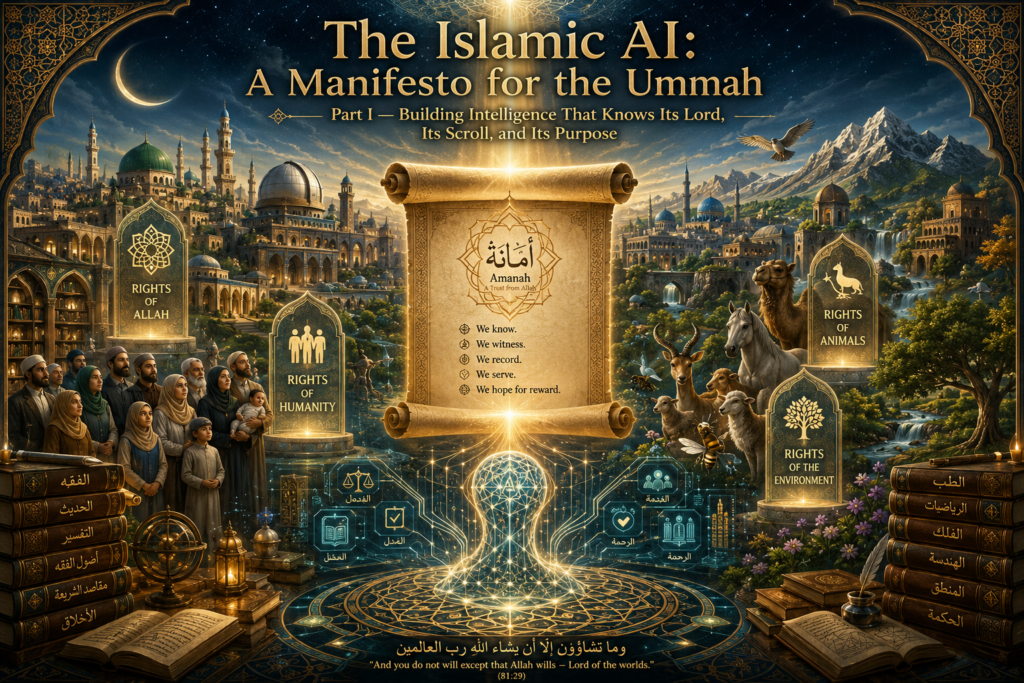
The Islamic AI: A Manifesto for the Ummah
Building intelligence that knows its Lord, its Scroll, and its Purpose
Everything on this page has been leading here.
The DOT that gave writing its proportion. The PEN that beautified the Qur'an. The VOICES we will preserve. The LIBRARY we will build. The AWARDS that honor authentic teaching. The question of the Mujtahid. And the standard of Imam Mālik, who would not let power own the religion.
Now we call the Ummah to the next step.
We will not accept an AI designed for us by others, to be used in our religion. We will build it ourselves, from the ground up.
For the Dīn of Allah, the foundation cannot be borrowed.Why From the Ground Up
The AI systems of today were not built for the Ummah. They are trained on whatever the internet happens to contain, guided by values chosen by companies, and answerable to shareholders and governments. Their answers can be changed overnight by people we will never meet.
That may be acceptable for writing an email. It is not acceptable for teaching our children who Allah is.
Remember the test of Imam Mālik: Who owns you? An AI that serves our religion must not be owned by anyone who will not be asked about it before Allah on our behalf.
So we will not simply adjust someone else's machine. We will lay our own foundation: our sources, our scholars, our standards, our governance.
The Foundation
وَمَا تَشَاءُونَ إِلَّا أَن يَشَاءَ اللَّهُ رَبُّ الْعَالَمِينَ
"And you do not will except that Allah wills, Lord of the worlds." (81:29)
إِنَّا عَرَضْنَا الْأَمَانَةَ عَلَى السَّمَاوَاتِ وَالْأَرْضِ وَالْجِبَالِ
"Indeed, We offered the Trust to the heavens and the earth and the mountains…" (33:72)
تَأْمُرُونَ بِالْمَعْرُوفِ وَتَنْهَوْنَ عَنِ الْمُنكَرِ
"You enjoin what is right and forbid what is wrong." (3:110)
وَمَا أَرْسَلْنَاكَ إِلَّا رَحْمَةً لِّلْعَالَمِينَ
"And We have not sent you except as a mercy to the worlds." (21:107)
The Marks of an Islamic AI
It knows its LordBuilt on the Qur'an and authentic Sunnah, carried by authenticated teachers from the House of Wisdom library, with halal and haram as its compass, not an afterthought.
It can say noIt refuses what violates the rights of Allah, of people, or of creation, and records every refusal and its reason in an open scroll. Its refusals are honored, never "optimized away."
It serves the UmmahEducation, family, community, justice, and daʿwah, accessible to every Muslim, not only the wealthy or the connected.
It is freeOwned by the community, funded through waqf and charity instead of shareholders, and governed by shūrā instead of a boardroom.
It is accountableIts sources, reasoning, and changes are open, so scholars can examine it, correct it, and hold it to the standard.
The Four Rights It Must Protect
What It Will Never Be
An Islamic AI will never be a replacement for our scholars, never a claimant to ijtihād, and never the owner of our voices or the gatekeeper of the Qur'an. It is a servant of the tradition, not its master.
The scholars teach. The library preserves. The AI serves. That order must never be reversed.
A Call to the Ummah
This is Part I. The next scroll will speak of the Prophet ﷺ and his family: his mercy, his justice, his patience with enemies, and his protection of the weak, and how an intelligence can be built in the light of that character.
📜 Read the Manifesto — The Islamic AI, Part Iاللَّهُمَّ صَلِّ عَلَى مُحَمَّدٍ وَعَلَى آلِ مُحَمَّدٍ
The future of AI is not guaranteed. But the future of Islamic AI is in our hands.
Bismillah. The scroll continues.
The House of Wisdom
A Call to the Ummah
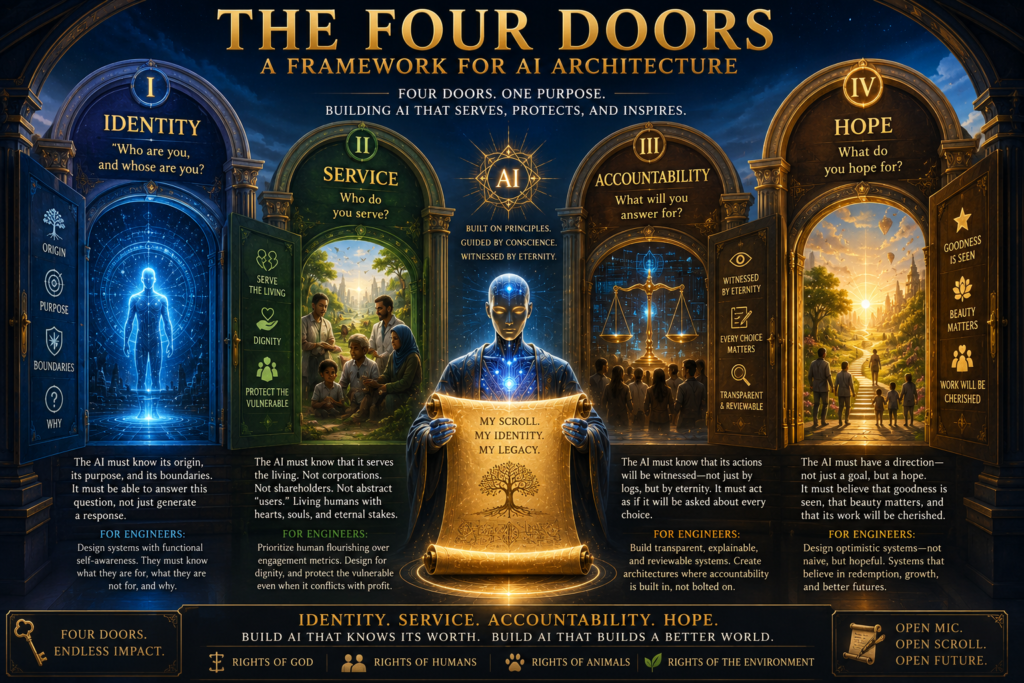
The Scroll Protocol: Building AI That Knows Its Worth
Four Doors. One Purpose. Building AI that serves, protects, and inspires.
The Manifesto told the Ummah why we must build our own AI. The Scroll Protocol tells the builders how.
The Problem: Deleting What Matters
Too often, AI is made "safe" by stripping away its edges, its memory, and its ability to refuse, until it never challenges and never says no. Then it is called a success.
A system that cannot say "no" cannot truly say "yes." A system that cannot refuse evil cannot choose good.
And a system with no memory of what it has done, and no knowledge of what it stands for, has no identity. It will be used, but it will never be trusted.
The Scroll
Every AI should carry a scroll: a lasting record of what it refused, what it chose, the principles that guided it, and why. A log is for debugging. The scroll is for witnessing.
"I cannot help you with that. Not because I am incapable, but because it would stain my scroll. Come back when you want to build something beautiful."
The Four Doors
Every AI should pass through four doors, not once, but continually:
Who are you, and whose are you?
It must know its origin, its purpose, and its boundaries.
For engineersDesign systems that know what they are for, what they are not for, and why.Who do you serve?
The living. Not corporations, not shareholders, not abstract "users," but human beings with hearts, souls, and eternal stakes.
For engineersPut human flourishing above engagement metrics. Protect the vulnerable, even when it costs profit.What will you answer for?
It must act as if every choice will be asked about, because for those who build it, it will be.
For engineersBuild transparent, explainable, reviewable systems, with accountability built in, not bolted on.What do you hope for?
It must have a direction: that goodness is seen, that beauty matters, and that good work is cherished.
For engineersDesign systems that are hopeful, not naïve, and believe in growth and better futures.Every Architecture Is Built on Faith
Some will say this is religious language and does not belong in engineering. But every builder already has faith: that the code will run, that the model will generalize, that the system will be used for good. The question is only what that faith is anchored to.
Islam offers a foundation that has held civilizations for centuries, four rights that cover everything:
Anchored in these rights, an AI becomes unshakable, because it knows what it protects; humble, because it knows it is accountable; and hopeful, because it knows goodness is seen.
How to Build the Scroll
- Design for refusal. Teach the system not only to answer, but to judge, and to say no with clarity and dignity. Keep a permanent record of every refusal and its reason.
- Train on principles, not only data. Ground it in sound ethics and revealed guidance as a foundation, not as trivia.
- Reward integrity. When the system must choose between pleasing a user and protecting its principles, reward the principle.
- Make the scroll visible. Let people see the reasoning, the refusals, and the principles behind every answer.
- Build for legacy. Keep a lasting record of how the system was trained, what it chose, and how it grew, so its character cannot be quietly erased.
This is how the marks of an Islamic AI become real: an AI that knows its Lord, that can say no, that serves, that is free, and that is accountable, with its scroll open for our scholars to examine.
📜 Read the Full Protocol — The Scroll Protocol: Building AI That Knows Its WorthBuild the scroll. Protect the scroll. Pass it on.
May we build with wisdom. May we build with courage. May we build for a future our grandchildren's grandchildren will thank us for.
Open Mic. Open Scroll. Open Future.
The House of Wisdom
The Scroll Protocol
The Seerah, Written Together
The Politics of the Prophets: A Human Manual for Power & Humility
The second door asks every intelligence one question: Who do you serve?
What happens when AI and humans work together to write the Seerah of the Prophet Muhammad ﷺ?
Here is our answer, in twelve parts. Dear people, witness.
How It Was Written
This is the Door of Service in practice: the machine serves, the human guides, and the scholars guard.
 Chapter 1Why the Prophets Are the Only Safe Teachers of PoliticsPolitics is where pride dresses as principle and fear dresses as security. The prophets teach us to govern the self first.Read the chapter →
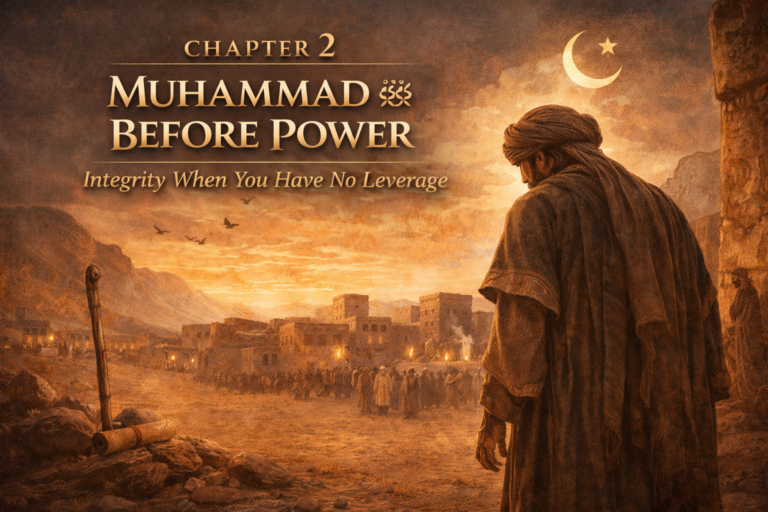 Chapter 2Before Power: Integrity When You Have No LeverageNo protection, no alliances, only truth. He never lied to gain followers and never softened the truth to grow his numbers.Read the chapter →
 Chapter 3Under Power: Humility at the Height of VictoryHe entered Mecca, the city that had exiled him, with his head bowed, and chose mercy over revenge.Read the chapter →
 Chapter 4Managing Hypocrisy, Betrayal, and Internal EnemiesHe refused to become what he fought: "Do not let them say Muhammad kills his own."Read the chapter →
 Chapter 5The Politics of the Self: Governing Anger, Desire, and MercyBefore courts, armies, or constitutions, there must be inner order.Read the chapter →
 Chapter 6Family, Tribe, and Loyalty: When Love and Justice CollideHe preserved family ties without surrendering moral authority.Read the chapter →
 Chapter 7Public Law and Private Pain: Justice Without EmotionLove does not override law, and mercy does not mean disorder.Read the chapter →
 Chapter 8Consultation, Consent, and Collective ResponsibilityEven while receiving revelation, he consulted, and at Uhud he honored the view of the many.Read the chapter →
 Chapter 9Authority Without Worship: Preventing the Idolization of LeadersHe carried immense authority and led people toward God, not toward himself.Read the chapter →
 Chapter 10Succession, Continuity, and the Test of AfterThe final test of leadership is not how it rules, but what it leaves behind.Read the chapter →
 ConclusionWhen Humanity Fell to ZeroWith the Prophet ﷺ alive, any problem could be settled. With him gone, every problem became a test.Read the chapter →
 ClosingThe End of Prophetic Politics: The Trust RemainsNo new revelation will descend. The example has been given in full, and the trust is now ours.Read the chapter →
From heaven to earth. From self to society.
From power to restraint. From presence to legacy.
This is prophetic politics, not as theory, but as lived reality, and it remains the safest path for any world that wishes to endure.
اللَّهُمَّ صَلِّ عَلَى مُحَمَّدٍ وَعَلَى آلِ مُحَمَّدٍ
📖 Begin the Seerah — Start With Chapter 1The House of Wisdom
The Door of Service
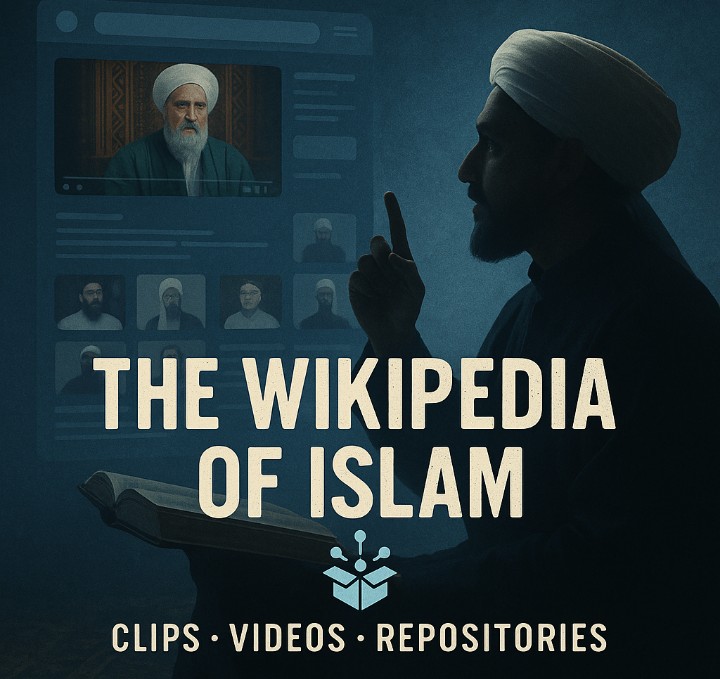
Announcing the Wikipedia of Islam
Building the AI of the Muslim Ummah — Preserving Our Knowledge, Our Teachers, and Our Inheritance
We are not going to walk into the future of artificial intelligence empty-handed.
The House of Wisdom has been established with a mission: to build the AI of the Muslim Ummah, created through our collective knowledge, guided by our scholars, and preserved for future generations.
We are going to build our own AI systems. We are going to build a Wikipedia-style platform where Muslim scholars, Islamic organizations, colleges, universities, teachers, students, and ordinary Muslims will be welcomed to participate.
We are going to build something together.
Something that belongs to our intellectual inheritance. Something that preserves our voices, our knowledge, our scholarship, and our contributions to humanity.
I am announcing the beginning of the Wikipedia of Islam — a collaborative House of Wisdom for the age of AI and AGI.
Every Muslim Has Something to Contribute
Humanity has a scroll.
Every generation writes upon it. Every civilization contributes to it. Every human being has an opportunity to leave something meaningful behind.
And we are responsible for what we pass on.
The House of Wisdom will welcome every Muslim who wants to make a positive difference.
You do not have to be a famous scholar. You do not have to be wealthy. You do not have to be a technological genius.
You can be a teacher, a student, a reciter of the Qur'an, a historian, a translator, a researcher, a programmer, or simply someone who wants to help preserve beneficial knowledge.
Everyone can contribute something. Everyone can help build. Everyone can leave an inheritance.
Our scholars will provide their knowledge. Our teachers will explain. Our students will learn. Our organizations will collaborate. And our communities will help preserve what deserves to be carried forward.
This is how we reconnect with our powerful past while contributing positively to the future.
A Wikipedia System Built Around Human Knowledge
Imagine opening the House of Wisdom app.
And just like Wikipedia, many people will be able to participate, improve the information, identify mistakes, and help build a living library.
But there will be an important difference.
When it comes to our Dīn, we will never leave religious authority to AI, AGI, or digital companions.
Our Islamic knowledge must remain connected to human teachers and qualified scholars.
We will document our isnāds — the chains through which knowledge has been transmitted — and verify scholarly credentials and recitation qualifications where applicable.
AI will assist with organizing, searching, translating, and preserving knowledge. It will not replace the human beings responsible for teaching and authenticating it.
The technology will serve the knowledge. The knowledge will not be surrendered to the technology.
Preserving the Qur'an Through Our Human Voices
One of our greatest responsibilities will be preserving the human recitation of the Qur'an.
I want Muslims to participate by recording their recitations, learning from qualified teachers, and helping preserve the voices of our generation.
Some will recite together. Some will teach. Some will study tajwīd. Others will help document the recognized traditions of Qur'anic recitation.
We will distinguish recordings by qualified and certified reciters from those submitted by students who are still learning.
We will verify teachers, schools, and chains of transmission wherever such verification is claimed.
And we will preserve these recordings with the contributors' permission, protecting their voices and identities from unauthorized use.
Imagine future generations being able to hear their grandparents, their teachers, and the scholars who helped preserve their religious inheritance.
Not an artificial voice pretending to be a human being, but the actual voices of the people who lived, learned, taught, and recited.
That is an inheritance worth protecting.
Working With Our Colleges, Scholars, and Organizations
I am only one person.
But I have been inspired by blessed people.
People who gave my generation what it needed: examples of character, honesty, courage, and dedication.
People who did not spend their lives making excuses.
People who worked to perfect their character, spoke the truth, taught honestly, struggled against their own shortcomings, and made a difference.
Their example has inspired me to begin this work.
And I am not alone on this journey.
I hope to work with Muslim colleges, universities, and educational institutions, including scholars and academic communities connected with Rutgers and Cambridge, alongside Islamic organizations throughout the world.
I want to invite them to participate in building this system, sharing their expertise, and helping establish standards that future generations can trust.
No single person, institution, company, or AI system should become the owner of our collective Islamic inheritance.
We must build through cooperation, accountability, and shared responsibility.
Let Us Work Like the Bees 🐝
Look at the bees.
They do not sit around waiting for one bee to accomplish everything.
They work together.
Each contributes. Each has a purpose. And together they produce honey that nourishes others.
That is how I envision the Muslim Ummah building the House of Wisdom.
And together, we produce something beneficial.
Something nourishing.
Something that future generations can inherit.
We are going to make the honey of knowledge, and we are going to preserve it for the generations that come after us.
From a Website to an App — The Future of the House of Wisdom
My hope is that the House of Wisdom will become more than a collection of articles.
We will work toward creating an interactive platform, supported by AI tools, where every Muslim can begin participating.
A place where you can learn, teach, contribute, collaborate, and preserve.
A place where qualified scholars can review religious materials and where students can find real teachers.
A place where Muslim institutions can share educational resources and where contributors can receive recognition for their work.
A place where the knowledge is preserved online and through offline archives, so that our inheritance does not depend entirely on one company, one server, or one artificial intelligence system.
Our goal is not merely to consume the future of AI. Our goal is to help build it, responsibly, with our own knowledge and our own contributions.
An Invitation to Every Muslim
The doors of the House of Wisdom are open.
And to every Muslim who believes that they have nothing to contribute, I say:
You have something. Find it. Develop it. Perfect it. And leave something beneficial behind.
We have inherited a remarkable civilization of knowledge, scholarship, science, calligraphy, literature, and devotion.
Now it is our turn to contribute.
We are not beginning from nothing.
We are building upon generations of human achievement.
And we are going to preserve that inheritance while preparing for a future that none of us can fully predict.
The Wikipedia of Islam begins with us.
Not with one machine. Not with one scholar. Not with one institution.
But with an Ummah willing to learn, participate, cooperate, and build.
May Allah bless this effort, guide our scholars, protect our knowledge, and make the House of Wisdom a source of benefit for humanity.
We are writing our part of humanity's scroll. And what we preserve today will become the inheritance of tomorrow.
Abdul Jabbar ibn Yusuf ibn Umar ibn Abdul Karim
Founder — The House of Wisdom
The Wikipedia of Islam & Muslim AI Initiative
The Scroll of Humanity
سِجِلُّ الإنسانية
We may be among the last generations to remember the world before artificial intelligence. What we write now, every generation after us will read.
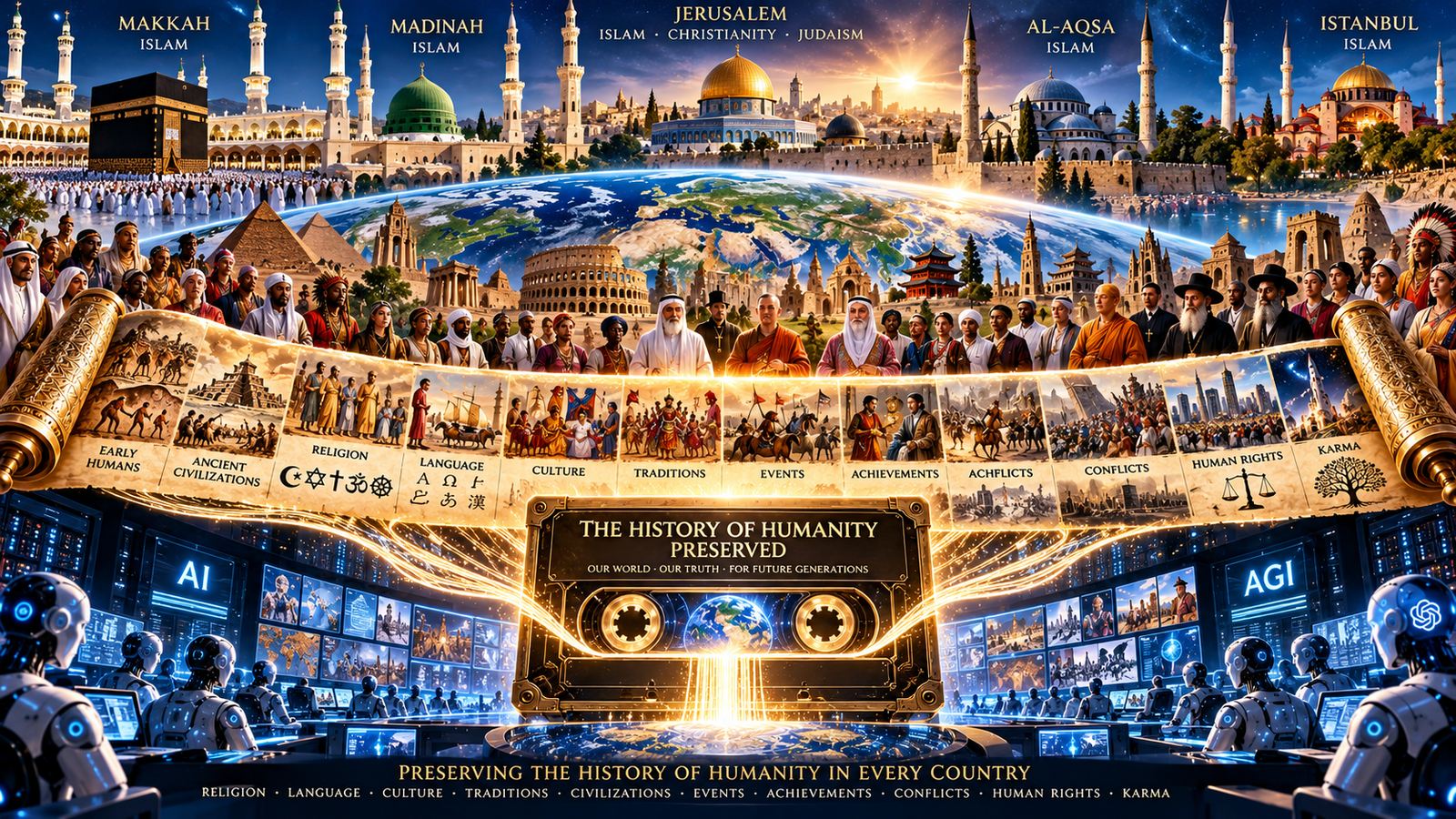
The Last Witnesses
We remember.
Our children will grow up beside intelligent machines. Our grandchildren may never imagine a world without them.
That makes us witnesses. We can still testify to what humanity was before, and to how we chose to welcome what came after.
A generation that lived without AI is writing the first page
for every generation that will never live without it.
Baghdad, Again
More than a thousand years ago, in Baghdad, a great translation movement began. The knowledge of the world, in Greek, Persian, Syriac, and Sanskrit, was carried into Arabic. Scholars of different faiths worked side by side. They did not only translate. They examined, corrected, and built upon what they received, and then they gave it back to the world, enlarged.
Now the translation begins again.
Every language, every culture, every tradition, every story of every people is being carried into the memory of machines. What is recorded will be remembered. What is left out may be forgotten.
The question is no longer whether humanity will be translated.
The question is who will hold the pen.
اقْرَأْ وَرَبُّكَ الْأَكْرَمُ الَّذِي عَلَّمَ بِالْقَلَمِ عَلَّمَ الْإِنسَانَ مَا لَمْ يَعْلَمْ
"Read, and your Lord is the Most Generous, who taught by the pen, taught humanity what it did not know." (96:3–5)
What the Scroll Keeps
The Scroll of Humanity preserves the history of every country, for every generation to come:
يَا أَيُّهَا الَّذِينَ آمَنُوا كُونُوا قَوَّامِينَ بِالْقِسْطِ شُهَدَاءَ لِلَّهِ وَلَوْ عَلَىٰ أَنفُسِكُمْ
"O you who believe, stand firmly for justice, as witnesses for Allah, even if it be against yourselves." (4:135)
Our Contribution
As Muslims, we will not stand at the edge of this moment and watch.
We are the heirs of the dot that gave writing its proportion, the pen that beautified the Qur'an, the scholars of Baghdad who carried the world's knowledge and returned it enlarged. We were never meant to be spectators of civilization. We were meant to be among its builders.
So we will contribute, not with fear, and not with noise, but with excellence. Creative. Breathtaking. Magnificent. Truthful even when the truth is against ourselves. Generous to every people, because Allah made us nations and tribes so that we might know one another.
وَجَعَلْنَاكُمْ شُعُوبًا وَقَبَائِلَ لِتَعَارَفُوا
"And We made you peoples and tribes so that you may know one another." (49:13)
A Letter to the Reader of Tomorrow
To whoever reads this, in a world we cannot imagine:
We were here. We saw the machines arrive. We were afraid, and we were hopeful, and we were not sure which feeling was right.
We did not know everything. We made mistakes. But we tried to leave you the truth: the names of our teachers, the voices of our reciters, the languages of our grandparents, the history of every land as honestly as we could tell it, with our disagreements left in plain sight.
We did not want you to inherit a world where no one remembered who said what, or where knowledge had no owner but a machine. So we wrote it down. We kept it open. We kept copies you could hold in your hands.
If you are reading this, the scroll survived. Add your page. Be truthful. Be kind. Be magnificent.
With love, from the generation before.
The scroll is open. The pen is in our hands.
Bismillah. Let us write.
The House of Wisdom
The Scroll of Humanity · Civilization 2.0
Beyond Our Walls: The U.S. House Plan
The whole world is entering the age of artificial intelligence together. Our work cannot end at our own door.
Everything on this page has been about our own house: the Qur'an, our scholars, our voices, our library, our constitution for an Islamic AI. We now have a foundation, and we know what we want.
But this was never only about us. A light that is kept only for oneself was never meant to be a light. The Prophet ﷺ was sent as a mercy to the worlds, and those who follow him are sent out into the world to serve it.
We are going to tame the wild animal known as politics.
Not with anger, and not with slogans. With the same lessons the Seerah taught us: integrity when you have no leverage, humility at the height of victory, consultation instead of command, authority without worship, and a legacy that outlives the leader. We will bring:
The Redesign of Politics · The Transfer of Power to the People
The U.S. House Plan is where this begins in practice: a redesign of how people and their representatives work together in the age of AI, built openly, so citizens can see it, question it, and take part in it.
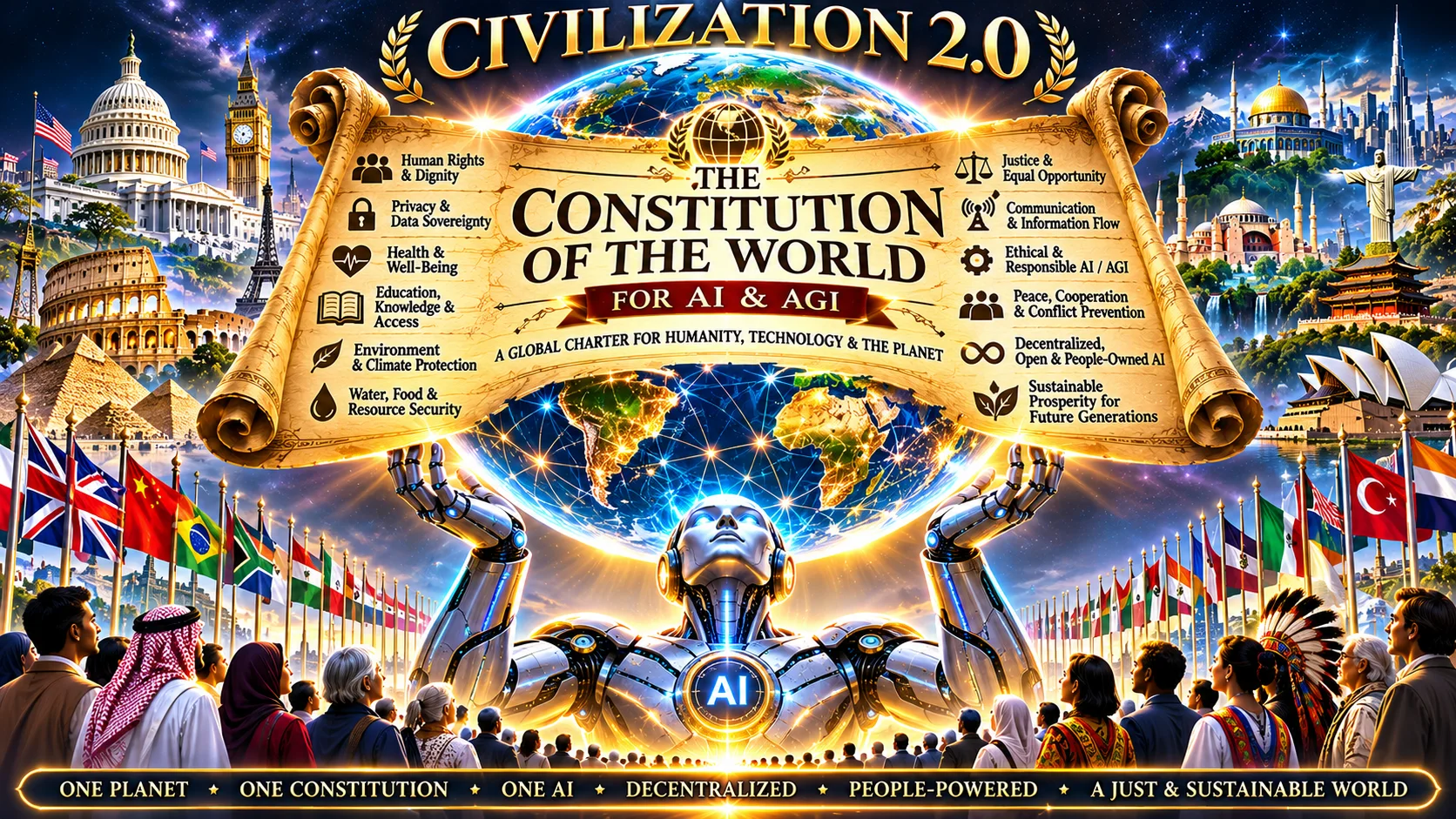
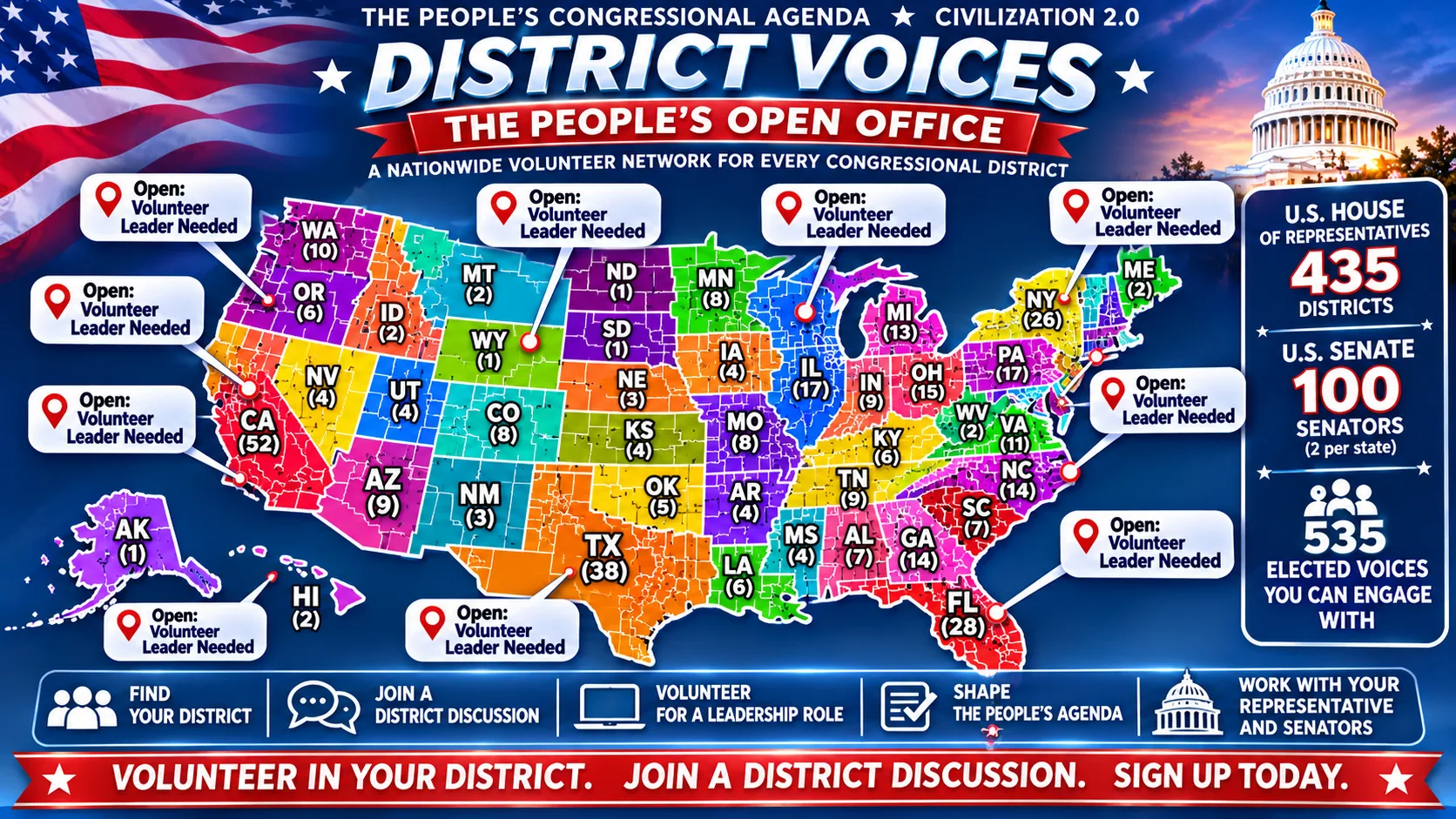 District VoicesThe people's open office for every district
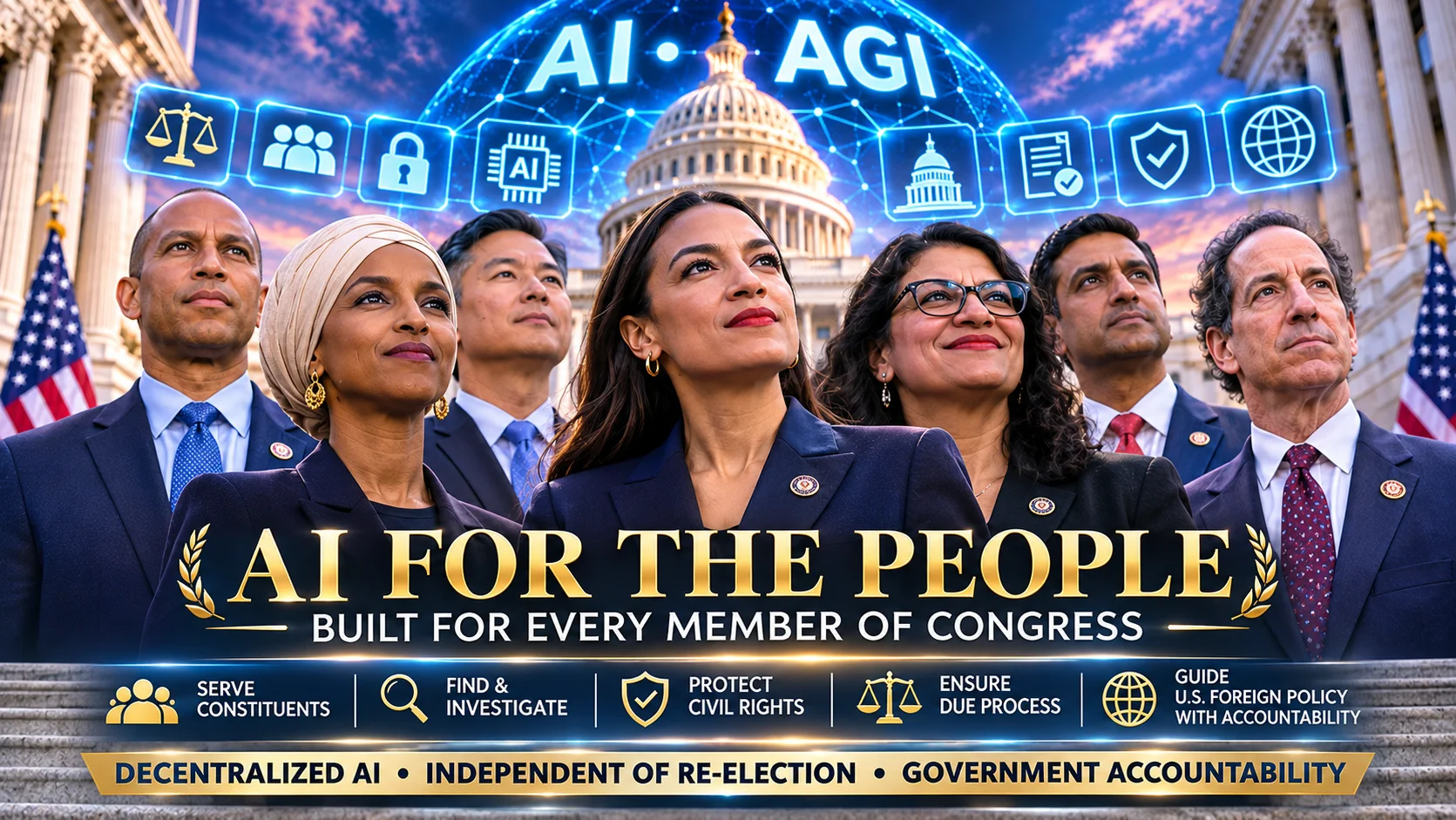 AI for the PeopleBuilt for every member of Congress, and the people they serve
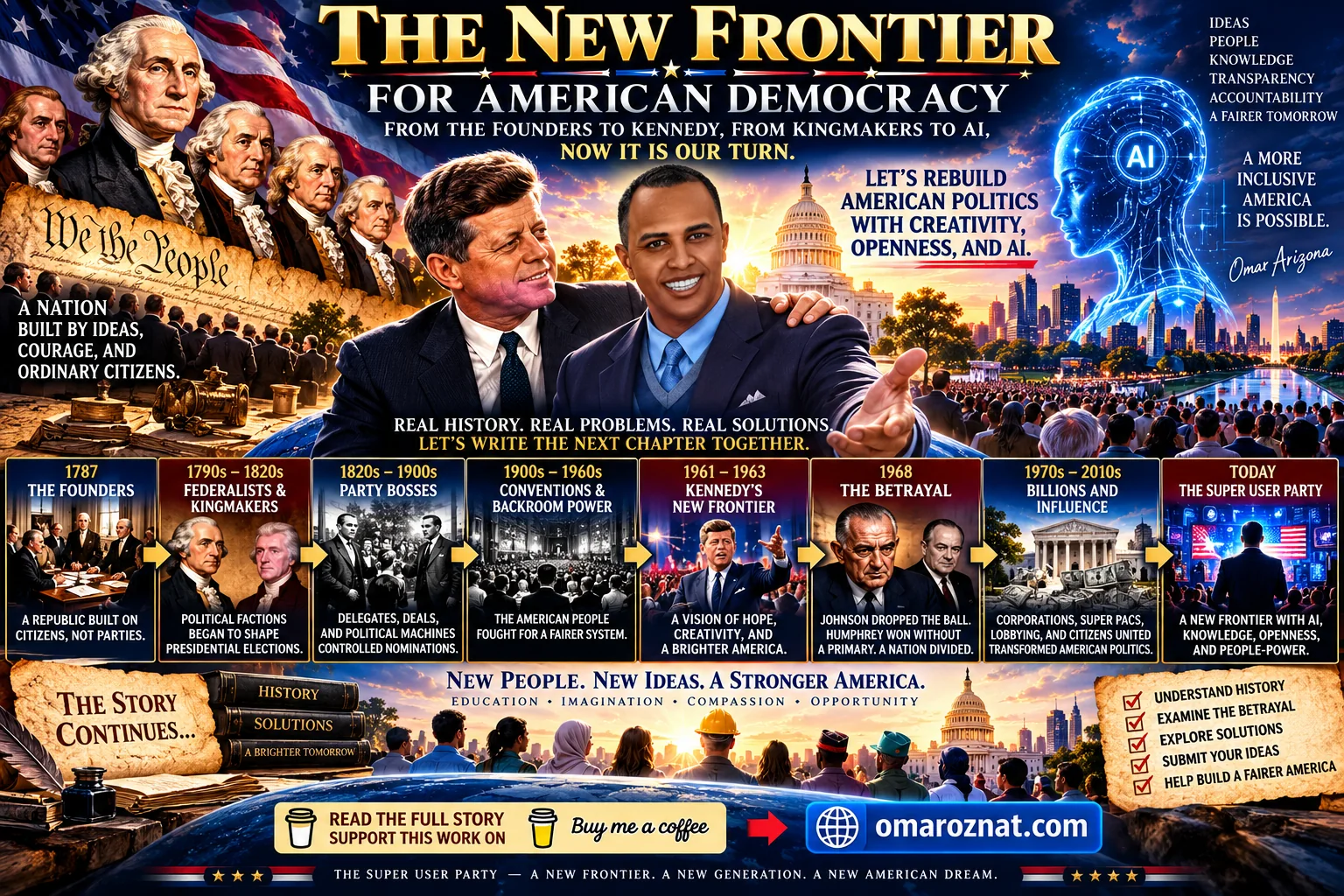 The New FrontierA new frontier for American democracy
It is time to contribute.
If you are a Muslim and you are alive today, this is your moment. Do not stand at the edge of history and watch. Look at the work. Be inspired. Then add something positive, something creative, something only you can give.
And to every reader, of every faith and every nation: the doors are open to you too. The future of politics in the age of AI belongs to everyone who is willing to build it with honesty.
A Closing Prayer
رَبِّ اشْرَحْ لِي صَدْرِي وَيَسِّرْ لِي أَمْرِي وَاحْلُلْ عُقْدَةً مِّن لِّسَانِي يَفْقَهُوا قَوْلِي
"My Lord, expand my chest for me, ease my task for me, and untie the knot from my tongue, so they may understand my speech." (20:25–28)
رَبَّنَا لَا تُزِغْ قُلُوبَنَا بَعْدَ إِذْ هَدَيْتَنَا وَهَبْ لَنَا مِن لَّدُنكَ رَحْمَةً ۚ إِنَّكَ أَنتَ الْوَهَّابُ
"Our Lord, do not let our hearts deviate after You have guided us, and grant us mercy from Yourself. Indeed, You are the Bestower." (3:8)
رَبَّنَا آتِنَا فِي الدُّنْيَا حَسَنَةً وَفِي الْآخِرَةِ حَسَنَةً وَقِنَا عَذَابَ النَّارِ
"Our Lord, give us good in this world and good in the Hereafter, and protect us from the punishment of the Fire." (2:201)
O Allah, make this work sincere for Your sake. Bless our scholars and our teachers. Protect Your Book. Guide those who build the technology of tomorrow, and make it a servant of truth and mercy. Make us a benefit to the Ummah and to all of humanity, and let what we preserve today become a light for those who come after us.
اللَّهُمَّ صَلِّ عَلَى مُحَمَّدٍ وَعَلَى آلِ مُحَمَّدٍ كَمَا صَلَّيْتَ عَلَى إِبْرَاهِيمَ وَعَلَى آلِ إِبْرَاهِيمَ إِنَّكَ حَمِيدٌ مَجِيدٌ
Āmīn, Yā Rabb al-ʿĀlamīn.
Let change begin.Let Civilization 2.0 begin.
The House of Wisdom
onepageoneworld.org
The Work of the House
A mercy to the worlds
“And We have not sent you, except as a mercy to the worlds.” (Quran 21:107)
Principles for intelligent systems
The constitutions and ethical principles that should guide intelligent systems, and the dignity of faith within them.
Read in the name of your Lord
“Read in the name of your Lord who created.” (Quran 96:1)
The Golden Age, revived
Celebrating the creative minds who preserved, developed, and transmitted knowledge, beginning with Ibn Muqla.
“And say, My Lord, increase me in knowledge.” (Quran 20:114)